|
Concerned by increasing reports of traffic injuries and fatalities caused by improperly licensed drivers, State Senator Michael Balboni this week announced that legislation he introduced to crack down on scofflaw motorists was just passed by the State Senate. The bill would make it easier for law enforcement to prosecute persistent violators whose licenses have been suspended or revoked but continue to drive.
"This week's tragic death of a Westbury toddler in a car operated by an unlicensed driver highlights the need for tougher enforcement of licensing laws," said Balboni. "Improperly licensed drivers often drive with impunity knowing that they only face traffic citations rather than real punishment. The evidence is clear that those who drive with suspended or revoked licenses pose a dangerous risk to public safety, and must face stiffer penalties when their disrespect for the Vehicle and Traffic Law results in the injury or death of an innocent, law-abiding person."
According to the NYS Department of Motor Vehicles nearly 165,000 New Yorkers were convicted of driving without a license or with a suspended or revoked license in 1999. Research from the Automobile Association of America (AAA) finds that one in five fatal crashes are caused by improperly licensed drivers and statistics for the National Highway Traffic Safety Administration indicate that drivers with suspended or revoked licenses have 3.7 times the fatal crash rate as licensed drivers.
License suspensions and revocations in all 50 states most often result from DWI convictions but rarely keep drivers off the road since violations usually result in only traffic summonses. In fact, some studies have found that as many as 75 percent of suspended drivers continue to drive during periods of suspension or revocation often getting into vehicular crashes.
While 44 states, including New York, have laws permitting vehicle confiscation, impoundment, or the withdrawal of vehicle registration upon Driving While Suspended (DWS) convictions, many jurisdictions are reluctant to impose the sanctions citing them as a financial burden on municipalities or undue hardship on families.
In order for a driver to be prosecuted for Aggravated Unlicensed Operation under New York's Vehicle and Traffic Law, three elements to the offense must be proven: operation, evidence of suspension, and knowledge of suspension by the operator. Persistent violators often deny knowledge of license suspensions or revocations even though the Department of Motor Vehicles regularly mails out suspension/revocation notices. Under Senator Balboni's bill, repeat offenders are presumed to be aware of their driving status and, thus, can more easily be prosecuted.
Reports about traffic fatalities caused by unlicensed drivers appear almost daily. On March 20 of this year, a 40-year-old Bay Shore woman was critically injured by an unlicensed driver in an unregistered, uninsured car. Only six days earlier, an East Setauket college student was killed in an uninsured, uninspected car driven by her mother, who was driving with a suspended license. In February, a 78-year-old Brentwood man was killed by a drunk, unlicensed driver operating an unregistered, uninsured vehicle. And earlier this year, a 68-year-old Babylon woman was killed by a truck driver who was driving with a suspended license.
To illustrate the laxity of sanctions against unlicensed drivers, Senator Balboni noted that under NYS statute, a bar owner serving alcohol without a liquor license faces imprisonment, and a cosmetologist practicing without a license is subject to civil fines up to $2,500. But a motorist who drives with a suspended license in an unregistered, uninsured vehicle will, in all probability, receive only traffic summonses.
"Too many fatalities are occurring on our highways at the hands of drivers who have no business being behind the wheel," said Balboni. "Driving is a privilege, not a right, and all motorists are obligated to abide by the laws governing our roadways. Unlicensed drivers deserve more than a slap on the wrist when their reckless behavior causes loss of life."
In an effort to protect the health of all New Yorkers, Senator Balboni has sponsored legislation which would place tighter restrictions on the sale, disposal and monitoring of the toxic chemical mercury.
"Mercury, like asbestos, was once thought to be a harmless substance and has been used in millions of homes, businesses and schools," said Balboni. "Now, knowing the health risks associated with improper mercury disposal, we should take an active role in preventing and reducing mercury contamination to protect the environment, wildlife and human health."
Mercury, readily found in thermometers, dental fillings, fluorescent lights and blood pressure gauges, is a known neurotoxin considered harmful to humans, wildlife and fish. Its toxic effects pose an especially high risk to fetuses and young children and can impair memory, attention span, language and motor skills. Mercury is listed as the #1 environmental poison by the World Health Organization and #1 on the Environmental Protection Agency's (EPA ) list of 19 most persistent and bio-accumulative toxic metals.
Mercury is a tasteless, odorless, invisible (when vaporized) chemical, which becomes dangerous when it leaks into the environment through unregulated and improper disposal of mercury-containing products. When washed down the sink or thrown down sewers with laboratory waste, dental amalgams or broken thermometers, mercury travels with the wastewater to publicly-owned treatment works (POTW) where pollutants and debris are removed, and the treated water is discharged back into the ecosystem. Technically very difficult for a POTW to remove mercury from its waste stream, bacteria inherent in the treatment process can methylate the available mercury making the re-released mercury more toxic to humans and wildlife. Once in the ecosystem, the mercury then accumulates and can contaminate the food chain.
Contamination can also occur when mercury vaporized in an incinerator is taken up into the atmosphere and then returned to earth as acid rain where it pollutes lakes, ponds, streams and groundwater.
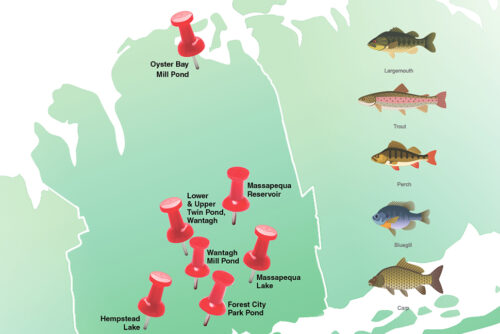
According to Balboni, mercury has been found in all waters of New York State of which 26 have fish consumption advisories because of mercury contamination (NYS Department of Health, 2000). In addition, 38 bodies of water statewide have been deemed to have dangerously high levels of mercury by the EPA.
The provisions of Balboni's legislation include:
* Requiring the manufacturers of mercury-added products to disclose the amount of mercury contained.
* Places a ban on mercury thermometers and mercury-containing toys or games.
* Requires labels on mercury-added products informing consumers of the presence and recycling requirements of mercury.
* Requires mercury-added products to be source separated from the mercury they contain before being placed in any waste disposal area of the state.
* Prohibits any mercury-added products to be disposed of in solid waste, radioactive waste, medical waste or wastewater.
* Requires the use of mercury containment traps for plumbing systems where it is determined there is a need for such traps.
* Requires dental offices to submit an annual amalgam mercury report.
There are currently nine states which have voluntarily instituted regimens for handling mercury-contaminated waste.
|