News
Andrew Laszlo

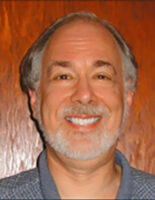
When first meeting Andy Laszlo of Upper Brookville, you can't help but notice the twinkle in his eye, still at 81 years old. Those eyes served as the "eyes of the audience" capturing images in more than 30 feature films, many TV specials and shows, numerous TV commercials, nine television movies including: Everett Hale's The Man Without a Country, 1972, and James Clavell's Shogun, 1981, both of which earned him Emmy nominations. His 50 years as a cinematographer included blockbuster movies: First Blood, The Warriors, Poltergeist II, and Innerspace.

Laszlo will read from and sign his new novel A Fight of No Consequence, from Publish America, at Barnes & Noble on Northern Boulevard in Manhasset, at 7 p.m. on Thursday, April 12.

In his third novel, A Fight of No Consequence, Laszlo explores the world of a recently released prisoner/fight promoter, The Prince, Duane Prinez, who drums up a new "all consequence," Roman gladiator type of fight. In this "ring" there are no referees or bell to save a losing fighter.

The novel goes on The Prince's journey through a menagerie of colorful characters, his dazzling beautiful starlet girlfriend, Louise or "Sugarplum," and his friend the deadly adversary, Alex. They traipse through a landscape of triumphs and failures, intrigue, deception and murder. What's happening aboard the Sugarplum II floating casino and who is funding it?

After an illustrious career as one of Hollywood's top cinematographers, Laszlo reacquainted himself with writing in his mid-70s, having won a writing contest as a young boy in Hungary. He wrote numerous industry articles and then his first book prompted by cinematography seminars he conducted with Kodak for 800 film schools worldwide in Every Frame a Rembrandt, Focal Press.

"In the film business, we often said this to mean the images that flash before our eyes, 24-individual pictures, per second," said Laszlo. Although he admitted sometimes it was said sarcastically, you can't help but feel the love of the art in Laszlo's words of instruction during a lifetime spent capturing images on film.

"Laszlo had more than knowledge, he had a brilliant way of imparting it," Andrew Quicke, professor of cinema-television, Regent University in Virginia said in the preface of Laszlo's book.

It is a fascinating account of five different films all with different challenges. In Innerspace's larger-and-smaller than life tricks, to lighting First Blood cave scenes with a torch, to darkening lights using techniques like smashing the bulbs with a hammer so as not to miss a shot of a train coming on yet another movie.

"I love gadgets and I'm tinkering all the time," Laszlo said. This proved very useful on many movie sets and locations when quick ingenuity was needed. It also led Laszlo to have two of his non-photography inventions actually patented. One is an ice skate sharpener inspired through a need Laszlo saw while his daughter, Liz, (a double gold medal figure skater) skated and his three sons played hockey. The other is a fly-fishing-fly tying bench to make it easier to "bait" fly-fishing hooks.

It was his out-of-the-box thinking, fascination with light and how to capture or enhance images to tell the story best, that was a guiding light to Laszlo's skill and gave his work a difference above other more "polished" typical studio work.

When asked about new techniques like moving or shaking cameras as used on TV, Laszlo added, "I don't mind those techniques as long as it's not overdone. There's a tendency in the industry to latch on to something new and everyone does it to death." He added, "Secret techniques shouldn't be noticed."

Laszlo's love of the camera began when he was 7 in 1933 in his hometown of Papa, Hungary. His brother gave him the camera he himself got as a present and didn't want. Laszlo began capturing his first images.

"This was my first exposure to the mysterious and magical world of photography-seeing the wonder of images captured by a camera brought to life by sunshine," Laszlo wrote in his book It's A Wrap, filled with fun anecdotes of the movie industry. Laszlo said it is the "how not to shoot a movie" book.

His camera training was cut short by the German occupation of Hungary in 1944 where he was conscripted into a forced labor unit of the Hungarian Army. Laszlo was able to survive two Concentration camps: Bergen-Belsen in Germany and Theresienstadt in Czechoslovakia, but lost his family, which he recounts in his autobiographical book, A Footnote to History, University Press of America. He immigrated to the United States in 1947 only to be drafted into the Army in 1950.

"I managed to wind up in the Signal Corps and completed the Army Motion Picture School." It was there that Sergeant Laszlo learned about film and shot lots of footage as a combat cameraman.

When reminiscing and giving advice to upcoming cinematographers in the business, Laszlo says, "I started out with a broom. I swept up a lot on sets and did anything as an apprentice. It takes perseverance, like a religion or a conviction inside you."

His first mainstream job was as a camera operator on the The Phil Silvers Show, (1953-1957), then Naked City (1959-1963). His first feature film, One Potato, Two Potato (1963) gained a lot of attention in the Cannes Film Festival. Then bigger and better films pre-empted his television work. You're A Big Boy Now, (1966) with director, Francis Ford Coppola, was heralded by some critics for ushering in a new wave of production and cinematography. Laszlo did many films: The Warriors (1978), Shogun (1979), Funhouse (1980), Southern Comfort (1981), I, The Jury (1981), First Blood, (1982), Streets of Fire (1983), Poltergeist II (1985), Innerspace (1986), Star Trek V - The Final Frontier (1988), Ghostdad (1989) and his last Newsies (1991) and many others.

His work also included many Ed Sullivan overseas specials and "The Beatles at Shea Stadium."

Laszlo was honored with two separate Lifetime Achievement Awards: in 2001, at the Worldfest-Houston International Film Festival and the other in 2006, at the Alba Regia International Film Festival in Hungary. In 2006, he was the recipient of the prestigious, rarely awarded Eastman Kodak Gold Medal.

Laszlo has just finished writing a historical novel set in Japan in the 1800s.

You can find Andrew Laszlo's non-fiction books: Every Frame A Rembrandt: Art and Practice of Cinematography, Focal Press, It's A Wrap, ASC Press, Footnote to History, University Press of America, and fiction books: The Rat Catcher, Dan River Press, The Seven Graces of God, PublishAmerica and A Fight of No Consequence, PublishAmerica, at area bookstores, Barnes&Noble or at Amazon.com.


LongIsland.com Logo
An Official Newspaper of the
LongIsland.Com Internet Community


| antonnews.com home | Email the Syosset Jericho Tribune|
Copyright ©2007 Anton Community Newspapers, Inc.
All Rights Reserved.

LinkExchange
LinkExchange Member

Farmingdale Observer Floral Park Dispatch Garden City Life Glen Cove Record Pilot Great Neck Record Hicksville Illustrated News Levittown Tribune Manhasset Press Massapequan Observer Mineola American New Hyde Park Illustrated News Oyster Bay Enterprise Pilot Plainview Herald Port Washington News Roslyn News Syosset Jericho Tribune Three Village Times Westbury Times Boulevard Magazine Features Calendar Search Add An Event Classified Contacting Anton News