By Dr. Frank A. Tassone
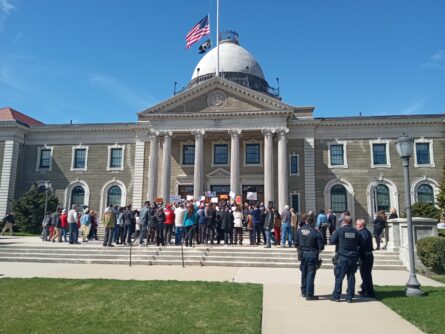
Dozens of parents attended the Board of Education meeting on November 20 to hear a report about the co-teaching program. Many of the parents spoke about the great progress their children have made in school because of this innovative and child-centered approach, and expressed their strong desire that co-teaching be expanded. I thank them for attending the meeting and for speaking so openly and sincerely. I know that it isn't easy for everyone to stand up in a public meeting and speak about their personal experiences or those of their children.
This scene was in stark contrast to the biased way in which Roslyn's special education program was depicted in several articles which had appeared in Newsday a few days earlier. As part of a lengthy series of articles on special education on Long Island, the newspaper focused on the experience of minority students in our community.
The reporter who wrote the story first contacted the Roslyn Public Schools six months ago. Her visits to several of our schools included observing a number of co-teaching classes and special education classes, as well as interviews with many people. Assistant Superintendent for Pupil Services and Personnel Madalyn Moses and Director of Special Education Dr. Andrew Romanoff spent several hours each with the reporter, as did any number of teachers and other staff members. I extended a personal invitation to the reporter a few weeks ago and was interviewed by her for nearly three hours.
You would never know any of this from the articles that appeared in the paper. There was virtually no description of any of our programs. Co-teaching, a cutting-edge program in which two teachers work in a single classroom, was barely mentioned.
Co-teaching represents one of the most extensive efforts made in any school district to reduce the numbers of self-contained special education classes and thereby reduce the stigma of being a special education student. There are 25 such classes in the high school and middle school in all major subjects. The parents of special education students who spoke at the Board meeting on November 20 were unanimous in their expressions of gratitude to the school district for expanding co-teaching from a pilot project with only two classes a few short years ago to the comprehensive program it is today.
The reporter's failure to provide a fair and objective account of Roslyn's special education programs was not the only omission in the article. A selective use of statistics further advanced the newspaper's preconceived notions about special education in Roslyn. For example, the reporter chose only to mention special education enrollment figures for a single year, 1995-96, though she had also requested figures for the following years which would have clearly demonstrated a positive trend toward declassification of students. These statistics are just one example of the numerous requests for data with which we readily complied. We are justifiably proud of a special education program which makes extraordinary efforts on behalf of each individual student, and we willingly presented information to Newsday in the expectation that the story would be balanced and informative.
I must make it clear that I do not disparage the views of any Roslyn parent or student who was quoted in the newspaper. In fact, I initiated the African American Parent Advisory Committee a year and a half ago for the express purpose of encouraging parents to voice their concerns about their children's education so that we could work together to better help all our students succeed. We will continue to listen to all of our constituents and make changes in our programs whenever they are required. However, an article that gives vent to frustrations, however justified those frustrations may be, without portraying the extraordinary efforts we have made to address them, is simply poor journalism. The article on Roslyn was characteristic of Newsday's uninformed approach to this highly complex subject.
Among the other aspects of Roslyn's program which the reporter investigated but chose to ignore are:
the vast change in the nature of special education over the past 10 or 20 years, including the introduction of co-teaching on a large scale which has drastically reduced the number of self-contained classes;
the efforts made by our district to reach out to all of our constituent groups, and the many changes that have been introduced as a direct result of the very concerns about student achievement that were raised in the articles;
the overwhelming majority of Roslyn students, including African Americans (10 out of 11 in the class of 1997), who are accepted to college each year;
the reduction by 15 percent in the number of black special education students in the last two years.
Regrettably, Newsday could have provided a genuine public service by helping school districts educate parents about how much special education has changed, how willing schools are to address their concerns, and how their greater participation in the process will help their children succeed in school. Instead, they advanced their own agenda and missed a golden opportunity to help, rather than hinder, the improvement of the education of all the students in our region.
I have written a letter to Newsday expressing many of these concerns. Other letters and columns that have been published since the series appeared demonstrate that many Long Islanders took strong exception to the critical tone that pervaded all of the articles in the series. I encourage all residents to write to Newsday, as well.
Parents who are concerned that Roslyn may retreat from its commitment to the education of all of our youngsters as a result of these one-sided articles need not worry. On the contrary, this series reminded us of all the things we are doing right.