News
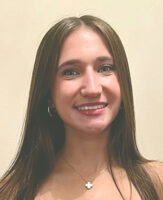
Meryl Schorr, Jane Künstler, Katie Easterly, Sandra Roberts and Sara Anderson. Photo courtesy of Tom Gould.

Artist Mort Künstler and teacher Sandra Roberts have something in common: Both make history come alive. Mr. Künstler does it with paint on canvass with a generous amount of historical research. Ms. Roberts did it with a classroom of students, 6 million paper clips, and the history of the Holocaust, as she created the Paper Clips Project.

The two came together after Mr. Künstler's daughter Jane, gave her parents a copy of the Paper Clips documentary film that touched her heart and theirs. Mr. Künstler contacted the Whitwell Middle School in Tennessee, where Ms. Roberts teaches and donated some books and prints to the school library, including his American Spirit book.

"That was what initiated our relationship with them. I started an email correspondence with the teachers at the Whitwell school where the Paper Clips Project took place," Jane Künstler said.

When Ms. Roberts, an eighth-grade Language Arts teacher from the Whitwell Middle School said she was coming to New York to speak at the United Nations on Holocaust Remembrance Day it was the perfect time for her to visit Oyster Bay. Ms. Künstler wanted her to speak at her synagogue, the Kehillath Shalom in Cold Spring Harbor; and that same day, Ms. Roberts would be able to speak to Oyster Bay-East Norwich school children in the sixth and eighth grades.

She said, "I wanted her to come to my CSH synagogue; as well as to talk to eighth-graders about the Holocaust and to sixth-graders about bullying.

"Ms. Roberts spoke to sixth-graders at Vernon and the impact was unbelievable. Teacher John Youngs was there as was Principal Allison Brown."

Ms. Brown said afterward, "Sandy's program was sensitive and geared to touch an age-appropriate response in each student. It was simple enough for the youngest to understand and powerful enough for the most sophisticated student to appreciate. She is a wonderful teacher who obviously understands children. The pace was excellent and moved in such a manner that it was virtually impossible for any student to lose interest. More than believe, I know Sandy has made a difference in our students' lives. We greatly appreciate it."

Laura Seinfeld _OB-EN assistant superintendent for instruction commented, "I briefly observed Sandy working with a group of sixth-grade students and her presentation was thought provoking, sensitive, and very timely. The activity was interactive and well-organized, leading toward deep understandings among these youngsters."

Vernon teacher John Youngs added, "Having Sandra Roberts in the class was a eye opening and life changing experience for the students in my classes. Her laid back yet engaging demeanor captured the students' attention. For days after the visit, the children continued discussing what Sandra talked about in class. The visit also ignited a desire to prevent bullying and learn more about WWII and the Holocaust."

Ms. Künstler said, "Sandy Roberts is an internationally known teacher and speaker. One hundred fifty people came to hear her at the synagogue and you could hear a paper clip drop. At the Oyster Bay High School Library they had 100 kids listening to her: The entire eighth grade and some ninth-graders came."

While Ms. Roberts spoke at the United Nations on Tuesday, Jan. 29, the Oyster Bay students were watching the documentary Paper Clips that tells the story of Ms. Roberts attempt to explain to her students about the Holocaust.

Ms. Künstler said, "It was amazing to see the movie, and amazing to hear the story. Ms. Roberts is a teacher in Appalachia, a poverty stricken area with a homogeneous population. There, she taught in 1999, a class about tolerance and hatred and the students learned about the Holocaust.

"The students couldn't comprehend the numbers when talking about 6 million Jews. They started collecting paper clips as a counting device and it became international news in 2000 and the publicity got them loads of paper clips. Still, it took eight years to do it.

"Add to that, that they never met a Jew," said Ms. Künstler.

The Whitwell Middle School explained its project to the world on its Internet site. It described the area by saying, "Whitwell Middle School is a small rural middle school located in eastern Tennessee. Our student body consists of about 425 students who are mostly Christian with very little cultural diversity. In our entire student body, we have only five African-American students. Those five students represent all of the cultural diversity in our school.

"It is for this reason that we decided that our students needed to be prepared to handle the diverse world that they will be charged with leading in the future.

"However, when we mentioned that 6 million Jews were murdered in the Holocaust, our students could not believe that that many people were killed and no one did anything to stop it. So, to show them just how many 6 million is, we came up with the paper-clip project. We chose paper clips for a special reason. During World War II, Norwegians wore paper clips on their clothes to show their opposition to Nazism and anti-Semitism," states their Internet site.

The story was turned into a book by two German journalists who covered The White House: Peter and Dagmar Schroeder. They wrote Six Million Paper Clips: The Making of a Children's Holocaust Memorial, published in November 2004: This is their second book, their original book was written in German.

Ms. Künstler said, "I gave a copy of the book to Vernon Principal Allison Brown. The story has a great connection to today in that the Nazis were the extreme bullies. OB-EN teacher John Youngs talked about the book to the students."

Ms. Künstler said Ms. Roberts didn't talk about the Holocaust to the sixth-graders. She talked to them about the five steps of bullying. The first is speech; then avoidance based on what you hear about someone; then discrimination and saying, "What are you doing here? You can't sit here"; the next step is physical abuse like pushing and shoving; the final step is extermination. She said that last step wasn't mentioned to the younger children. But, she added, "These things happen. In 1990 there were about 13 bullying murders in Tokyo. They went beyond bathroom fist-fights."

Talking about bullying works. "It made kids think about what they are doing and the impact it has on other's lives," she said.

With the eighth-grade students Ms. Roberts talked more about the Holocaust. She asked the students how many had seen bullying and some raised their hand. She then asked how many had told an adult and three raised their hands. She equates that to the Holocaust.

Mr. Youngs told the sixth graders about two boys who had been bullying another kid and then apologized to him, a life-changing event. He said that people often say the rhyme "Sticks and stones can hurt my bones but names can't hurt me," but he told the students, words are very powerful.

Ms. Roberts brought with her on her speaking tour, a 17-year-old former student, Katie Easterly, now in the 11th grade in high school, and a softball player as well. She also talked at the United Nations with Ms. Roberts and was very well-spoken and articulate. Katie said she had never met a Jewish person.

Ms. Künstler said, "Their community is very poor. In fact 75 percent of the families are below the poverty level; 50 percent of the children qualify for the free lunch program. Many have never been to a McDonald's. There are no dentists because they can't afford to go to one. Before the Paper Clip Project, maybe 10 percent of those who graduated from high school went to college. Of those maybe five or six got associates degrees. The Paper Clip Project has changed that.

"They can only take 30 kids a year in the Paper Clips Project and now, 85 percent of the kids in the project go on to secondary education. It's truly amazing," she said.

The Paper Clips documentary started filming in the fall of 2000. They had barrels of paper clips and they weighed about 6,000 pounds - they received so many.

The film shows a group of Holocaust survivors from the Five-Towns area of Long Island that went to Whitwell and talked about their experiences at a dinner hosted by a local church. In it, a man named Sam tells his sad story and a young girl listening to him is crying. Afterwards, on the receiving line to meet the survivors, she falls into his arms. He's like a grandfather to her, and she tells him her goal is that she will tell her children and their children so they will all know what happened. Sam and Kathy bonded and refer to each other as grandfather and granddaughter.

Ms. Künstler said "Last year, Kathy called Sam and told him that he was going to be a great-grandfather. It's amazing the impact it has had on so many people."

The memorial itself was created from one of the railroad transport cars used to carry Jews to the concentration camps. It was located by the two German writers, Peter and Dagmar Schroeder who are Christian. They used six weeks of unpaid vacation to go to the north of Germany and find a railroad car for the Whitwell project. The museum sold the car to them at cost. German citizens paid for it and paid for it to be sent to Baltimore. Everywhere it went, on hearing about the story of the car, companies did all the work involved in the transportation, free. The car traveled through Washington and Baltimore. When the train arrived in Tennessee, they gently laid it down on tracks built for the train. Everyone involved was there and spontaneously, the children all jumped to their feet and cheered as the train arrived.

The community had done all the work of preparing the site. Then they volunteered to restore the transport car. They stripped off old paint and worked on the inside to create the memorial.

Wikipedia explains the museum stating:

"The Children's Holocaust Memorial consists of an authentic German transport car (which arrived in Baltimore on December 9, 2000) surrounded by a small garden. The railcar is filled with 11 million paper clips (6 million for murdered Jews and 5 million for Gypsies, homosexuals, Jehovah's Witnesses, and other groups). The monument was uncovered on the anniversary of the Kristallnacht, November 9, 2001.

"Inside the railcar, besides the paper clips, there are the Schroeders' book and a suitcase filled with letters of an apology to Anne Frank by a class of German schoolchildren.

"A sculpture designed by a gentleman from Ooltewah, TN stands next to the car memorializing the 1.5 million children murdered by the Nazis, incorporating another 11 million paper clips."

Ms. Künstler said, "Basically Ms. Roberts is an amazing teacher. Someone asked her 'what is your favorite part of the project? She asked, 'the honest answer or the PC answer?' 'Both,' she was told. The PC answer was that it made a difference in the world but the honest answer was, she just loved being with the kids and teaching them and learning from them."

Ms. Künstler said when she introduced Ms. Roberts at the synagogue she used Margaret Mead's famous quote, "Never doubt that a small group of dedicated people can make a difference. It is the only way things ever happen."

She said, "It was absolutely true. Sandy made that difference."

Since the movie, the school has received funding and donations to make improvements. Some of the kids are going to synagogue and to a seder and learning Hebrew. Ms. Roberts has been to Europe and to visit concentration camps and is planning on going to Israel with some students.

At the synagogue Ms. Roberts told a story about someone who came to see the memorial in Tennessee. "It was a doctor, and they never met someone that well educated. The only people with college degrees they ever meet were their teachers. The doctor said if any students show an interest in medicine and have the potential, he will fly them with Ms. Roberts to Los Angeles to stay at his home and go to the hospital to learn what it is like to be a doctor - and all at his expense.

"A few weeks ago they had $75,000 in college scholarships for those kids. One got a full four-year scholarship including living expenses - something no one there has ever heard of," she said.

The DVD, Paper Clip Project has a scene about a man who sent a letter to the Paper Clip Project, along with a paper clip. "He was a Jewish American soldier and was one of those who helped liberate Dachau, an infamous concentration camp. He said that when he was there, a young woman, about 20 years old and all skin and bones but with beautiful eyes came up and asked him, 'Are you Jewish?' and he kissed her hand and she left and went to the infirmary and she died shortly after she saw him. He never told anyone about it, about Malka. He wrote in his letter, 'this paper clip is from Malka.' It was amazing how she finally found a resting place in Appalachia, TN. It is an incredibly moving movie," said Jane.


LongIsland.com Logo
An Official Newspaper of the
LongIsland.Com Internet Community


| antonnews.com home | Email the Oyster Bay Enterprise Pilot|
Copyright ©2008 Anton Community Newspapers, Inc.
All Rights Reserved.

LinkExchange
LinkExchange Member

Farmingdale Observer Floral Park Dispatch Garden City Life Glen Cove Record Pilot Great Neck Record Hicksville Illustrated News Levittown Tribune Manhasset Press Massapequan Observer Mineola American New Hyde Park Illustrated News Oyster Bay Enterprise Pilot Plainview Herald Port Washington News Roslyn News Syosset Jericho Tribune Three Village Times Westbury Times Boulevard Magazine Features Calendar Search Add An Event Classified Contacting Anton News