|
|
Author of Lipstick Jungle and Sex and the City, Candace Bushnell ready to go on stage, wearing a St. John's suit given to her to wear for her presentation.
|
The members of the Sagamore Hill Chapter of Hadassah will have a head start as the new show Lipstick Jungle based on the book of the same name by Candace Bushnel, comes to television on Feb. 7 on channel 4 at 10 p.m. They met the author Ms. Bushnel when she spoke at the Nassau Region of Hadassah's Breath of Fresh Air luncheon, fashion show and fundraiser held at the Garden City Hotel recently. Proceeds from the event were designated for the Institute of Pulmonology at the Hadassah-Hebrew University Medical Center of Jerusalem.
As the luncheon ended, many guests stood on line to purchase autographed copies of the book. Ms. Bushnel was a vibrant speaker. She was as good as her character Carrie Bradshaw in Sex and the City, her newspaper column that turned into a TV series. She told the audience that when she was interviewed by Barbara Walters, the TV host said she was really worried about Candace's marriage to her 6'4", blonde ballet dancer husband asked "What do you talk about?" Ms. Bushnel answered, "Me! So it's going to last a long time." She said when she went out with men 15 years older than she the conversation was all about them. Being married to a man 10 years younger than she, the conversation now is all about her!
In person, Ms. Bushnel is engaging. She is lots of fun, and like many good writers, she tells a great story and hers, always have an underlying message.
She told the story of her own path to success. At age 40 she found she couldn't support herself with her writing. Her mother told her to come home to Connecticut and sell real estate, something she enjoys doing. Instead a friend offered her $3,000 in advance payment for her stories and a couch in her office to sleep on. That extra time allowed her career to turn around: She was asked to do a column for a newspaper and she came up with the topic Sex and the City which evolved into the TV series and set her on her feet and made her sitcom a household word.
She talked about her own life and how she arrived at the point of her life that inspired her newest book the Lipstick Jungle about women in business. It is a look at women 10 years after a new generation of women have become executives - women with power and money. Now they have choices - and as she did - can chose a younger man; a man who she supports as men have done for women over the years.
The book follows three successful women: an editor, a film director and a fashion designer. There are enough situations in the book to let most women identify with the women's lives. Ms. Bushnel does what the successful writer often does - she talks about what she knows - and women's lives, their struggles for relationships with men; their self-actuating of their talents; their roles as mothers - all add to the richness of the story.
A good novel is supposed to be a journey into someone's else's life with the result that through sharing that experience - we all grow. Lipstick Jungle has that element. It's woven into the subtext of story - always in an amusing way.
Add to her other credits, that Ms. Bushnel is a thoughtful stand-up comedienne. She challenged her audience saying: this is 10 years after the "revolution" and they too now have more choices available to them.
As the luncheon ended, Ms. Bushnel signed copies of her books to a long line of guests. Many of them left carrying the hatbox centerpieces. It was a delightful afternoon, especially since there were two speakers.
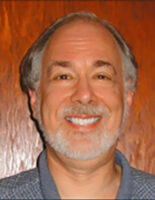
Proceeds from the Hadassah luncheon were designated for the Institute of Pulmonology at the Hadassah-Hebrew University Medical Center and Dr. David Ackerman of the Nassau County Asthma Control Program spoke on behalf of the work being done by the NC DOH in the control of pulmonary disease.
The doctor explained that the previous year the Asthma Control Program gave hepa filter vacuum cleaners to a few families to help children who he said, "have been gasping for breath half their lives." He said, only so much can be done in the doctor's office and this program works to make the home a safe environment. To find children to help, the NC DOH asked for the names of children who made frequent visits to the hospital emergency room. The result of the program was that it substantially helped the children resulting in less hospital visits. He said they helped 50 children but said hundreds need intervention.
Dr. Ackerman said one of the great success stories of the 20th century was ridding the country of the No. 1 killer of adults, tuberculosis - which he called an urban disease. It began with the creation of the American Lung Association. He said, "Meadowbrook Hospital was built for TB patients with outdoor terraces since it was thought to benefit patients- being in the warm sunshine and air. It was a major killer until the 1950s." It has been helped with a combination of efforts, by combining better nutrition, better housing and better medicine.
There was a recent blip in the statistics, he said as a result of the HIV infections in the late '80s and early '90s in which they saw a resurgence of TB in AIDS patients. But, he said, "We literally have conquered TB, here, but not in the rest of the world."
He said it was ironic that as they conquered TB, they are seeing the emergence of the No. 1 problem with lung disease and lung cancer that is caused by smoking. In the 1920s, and 1930s as people began to smoke, the disease shadowed the smoking population, he said, and he credited governmental efforts to curb where people can smoke as making a difference. "Nassau County was the first to ban smoking from the workplace," said Dr. Ackerman. New York State increased the cost of smoking through taxation; education in the schools; restricting tobacco advertising as well as creating advertising against smoking; nicotine replacement therapy - and still 20 percent of the people smoke in the U.S.
That in spite of the fact that the cost of cigarettes keeps rising. He said, "Teenagers are really sensitive to the increase in price of tobacco products."
He added, "Those laws need to be in place across the country to protect people from secondary smoke and to make people understand that smoking is not a normal activity. It is still the No. 1 health problem in the United States."_