|
|
A Whale Shark feeding on plankton in the Maldives, located in the Indian Ocean.
|
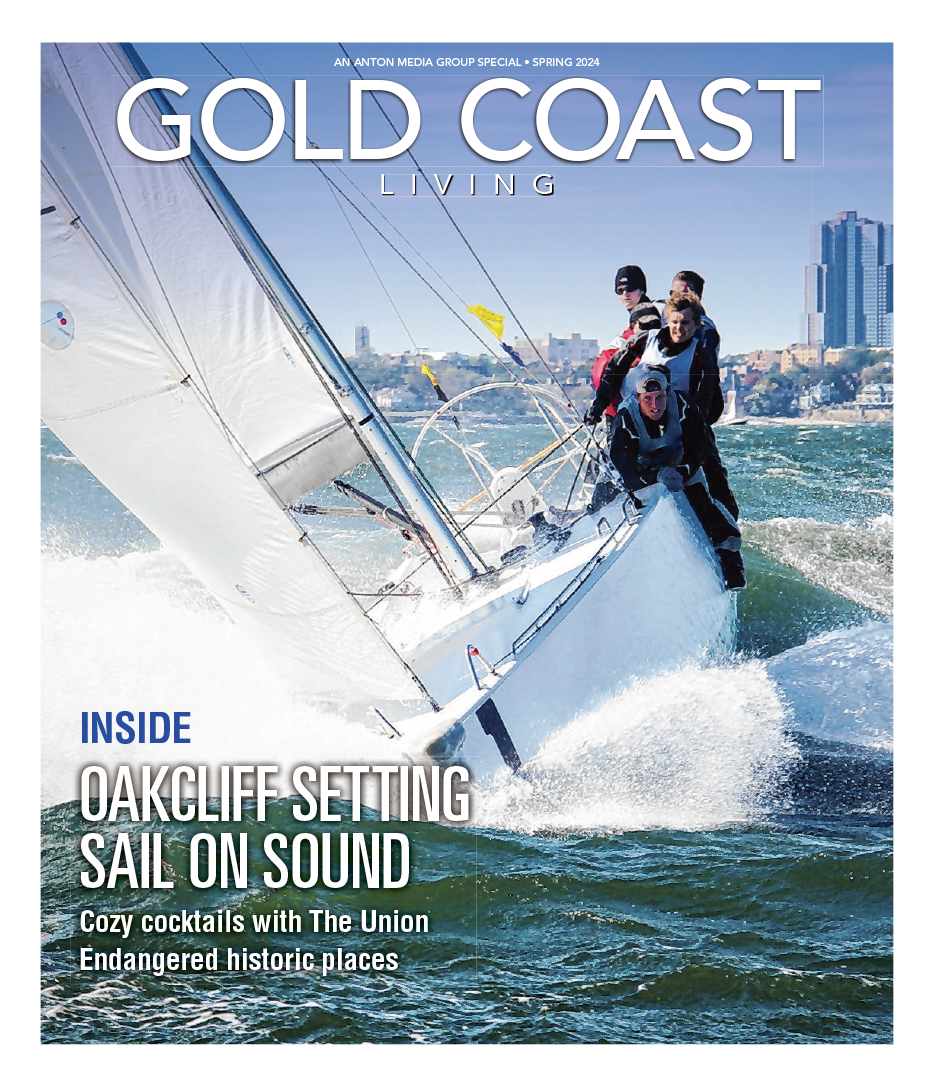
In sailboat racing there are times when things happen so fast that the crew does not have time to pause and take in the big picture of what is occurring in the race or to enjoy the beautiful natural surroundings. For several years, Alex Wolff Photography of Jericho has captured the scenery and the excitement that the 60 or so sailors routinely experience through Sagamore Yacht Club's Wednesday night sailboat races on Oyster Bay Harbor.
The experience that Alex has gained from shooting 10,000-plus photos of sailboat racing every year and the other shots he takes of family functions or corporate events continues to give Alex more insight into cultivating his craft. Perhaps from this interview some of you may be encouraged to use your camera or work with Alex to capture the unique things that we often overlook occurring in our lives and in nature.
Discuss some unique moments taking nautical or nature photos. Perfect light is always a plus but I make do with what is available. The series of photos that resulted in my specializing in nautical-related photography happened right here in Oyster Bay. The weather was a bit rambunctious for sailing and shooting; there were very strong winds and rough seas. I was crew in the pit of Liberty, when we saw one of the spinnaker class boats rocking and dipping spars in the water, very close to the beach. I think one of the boat's owners, Bob Kelly, said "something is about to happen; I will take your winch, get that camera ready." Just as I got my Olympus C4000 up to my eye, the spinnaker's keel ran aground, the boat pivoted, and the spinnaker tore loose. I captured all of it in a 14 shot stop action sequence. I was hooked. Also, when I was snorkeling in the Maldives (an island nation in the Indian Ocean) I was buzzed by a 25-foot whale shark and six manta rays. Not only did I remember to shoot, but a photo mentor shot me and the whale shark from the other side. Shooting video of sharks in the wild is just a little more exciting, but it is not something I get to do as often as I like.
Have you been critiqued professionally? Do have any mentors or teachers? The board of directors of the Professional Photographers of Greater New York (PPGNY) critiqued some of my work for my membership admittance. At monthly meetings, the professionals attending submit photos in a print competition that is judged by senior members with specific judging credentials. Prints are judged using 12 criteria, and a score of 80 is required to certify an entry as a merit print. From each class of prints, one is chosen as best in show. A photojournalistic print of mine won merit status and best in show for the portrait category at the September 2007 meeting. Even with all of the self-study and practice I do, I find outside critique and influence important to my development, both technically and creatively. The current PPGNY president, Owen Kassimir, of Owen Photography in Syosset, and several other PPGNY members have provided great insight. Of course, there are many photographers, like Jay Maisel, who influence me.
What type of camera, film, and other equipment do you use? Three years ago I stopped shooting film altogether. At that time I was usually shooting a Canon A-1 with Agfachrome film for color slides and Ilford for black and white. I shot Fujichrome Velvia for most of my underwater work. I now work 100 percent digitally, mostly with a Nikon D2X which has 12 megapixels. My lenses of choice for yacht racing around Oyster Bay are a Nikkor 17-55 F2.8 for close up work at the start and finish of the race when the sailboats are very close. I use a Nikkor 70-200 F 2.8 Vibration Reduction lens for the times I am at a long distance from the fleet or trying to catch the excitement of the crew. Occasionally, I flip on a Q-Flash to light up the boats when the sun is completely down, though I still have to work out how best to do that.
What are the trends taking place in photography? There are now digital cameras that can be programmed to not take a photo if the subject is not smiling! I think the biggest changes we will see in the next few years are that digital manipulation and converting photos to painting like images will be used more. Programs like Photoshop from Adobe and Picasa from Google will help people get more satisfaction out of the time they spend with a camera. There may also be a large wave of disappointment as casual photographers spend more money on equipment, but do not consistently get "professional quality" images. Directed education will be the key to bridging that gap. I have several amateur clients whom I teach advanced techniques about their cameras, photography, and software. I hope to see more of the serious amateurs finding professional mentors to help them get past the early bumps.
What is so unique about taking nautical photos? Being on the water, sun in my face, water speeding under the bow, a gentle roll, all speak of having a great time. Combine that with the changing quality of light on the water and you find every shoot a little different. Where is the sun? How will it reflect on the water? Will it bounce off the sail? Is the water smooth enough for a glass light reflection or so rough the best we can hope for is a color tinge on the waves? With water, light is never the same and the possibilities are endless.
How does one view and/or purchase your work? Much of my work is commissioned. Not only is this true for portraits of newborns, entire families, weddings, etc., but also for people's yachts. The rest of my work is available directly through me. My work can be seen online at various places like www.seawolff.com/photo/ and picasaweb.google.com/alexmwolffphotography. My new website will be live soon at www.alexmwolffphotography.com. Over the next several years, I am hoping to have a large collection of images that have a wide appeal as well as a good vehicle for selling them.
For more information about boating, environmental matters, and other water-related activities throughout the Oyster Bay area you can email the author at Jaime.VanDyke@gmail.com or reach her at 946-9464.