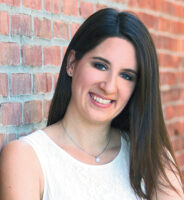
Carolyn McCarthy went to Congress in 1997 as an advocate for gun control after losing her husband in the 1993 Long Island Rail Road massacre, which also injured her son. Now, as she completes her fourth term in Congress, McCarthy has worked on other issues such as healthcare and education. She is seeking re-election to the Fourth Congressional District and is running on a record of experience.
|
|
Carolyn McCarthy
|
With the expiration of the Assault Weapons Ban on Sept. 13, McCarthy remembers well why she went to Congress, she put in new legislation the following day and is working on getting it tucked away into an omnibus bill for November. If not, she said she would introduce legislation in January.
"The shame of it is that between the time it expired and the time we get it renewed again, there are going to be too many of these assault weapons back on the street," she said.
McCarthy has been successful in getting some legislation passed to curb gun violence such as closing the gun show loophole so that those who buy guns at shows also must get a background check.
While McCarthy continues to fight for gun control and safety, she said she is not against law abiding citizens owning guns. "I have never tried to take away the right for someone to own a gun," she said.
The congresswoman's goal is to keep assault weapons out of the hands of those who would use them for crime such as members of gangs, which has become a serious problem on Long Island.
However, there has been much more to McCarthy's tenure in Congress than gun safety. An area of focus for much of the congresswoman's tenure has been education.
Congresswoman McCarthy supported the No Child Left Behind Act, an education reform designed to improve student achievement and change the culture of America's schools. However, she is disappointed that funding for the act has been cut and points out that more than half of poor children eligible for additional instruction in key academic subjects will go unserved.
"We thought it was a good bill. Unfortunately, there is no funding. It's an unfunded mandate now onto our schools," she said. "The burden is going to be on the people who are paying their school taxes."
Senator John Kerry, the Democratic nominee for president, has talked about eliminating tax cuts for the wealthiest 2 percent of Americans. "That's a lot of money. That would have made up the budget shortfall that's out there now," she said.
McCarthy expressed concern over middle and low income families in the Fourth Congressional District and therefore supported such initiatives as the $1,000 per child tax credit that would help such families.
In the area of education, McCarthy is working on HR 3519, the College Affordability and Accountability Act, and HR 3180, the College Opportunity for All Act, to help make college more affordable and accessible to all Americans. H.R. 3519 would ensure that states are no longer allowed to cut higher education funding.
Another area that has been a focus of McCarthy's is healthcare. Although the new Medicare law went into effect, McCarthy, a nurse, opposed the final Medicare reform law because, she said, it fails to help seniors with the high cost of drugs, begins to privatize Medicare, and damages the safety net for seniors.
While in Congress, McCarthy introduced and co-sponsored legislation to give Medicare recipients access to physical therapists, podiatrists and other specialists.
McCarthy is in favor of reforming Medicare. She pointed out that she aggressively supported a bill that begins to correct the disparity between the HMO premiums in Long Island and New York City.
Another area of concern is the high cost of prescription drugs. In order to combat the rising costs, McCarthy introduced HR 828. The Pharmaceutical Fiscal Accountability Act would allow a brand name substitute, or generic drug, to come to the marketplace quicker, thus increasing competition and driving down the price of all prescription drugs for every person.
An important issue facing many Americans is homeland security. McCarthy said she has worked with local fire and police departments to make sure Nassau County gets a fair share of federal homeland security funding as well as a $6 million grant to Nassau County to improve its Homeland Security Interoperability systems.
In addition, McCarthy introduced HR 3839, the Domestic Preparedness Act of 2004, which directs the Department of Homeland Security to begin awarding preparedness grant funds directly to local first responders.
If elected, McCarthy looks forward to continuing to work on issues such as healthcare, education, homeland security and gun safety. She said she would also continue to support the president when it comes to the military regardless of who is elected. "I'm not going to allow our young men and women, those in the military, to suffer because of politics," she said. "That's not who I am."
McCarthy has been nominated by the Democratic, Working Families and Independence Parties.
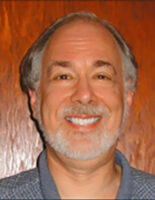
James Garner believes that it is time for a change in the Fourth Congressional District, which is why the Hempstead mayor is seeking election as the Republican nominee at this critical time in the nation's history.
|
|
James Garner
|
Mayor Garner believes that the most critical issue in this election is homeland security. "You can talk about the economy; you can talk about prescription drugs; you can talk about property taxes; you can talk about education. All that is important, but not as important as homeland security and terrorism," he said. "Until the homeland is safe, nothing else matters."
Mayor Garner believes there is no reason why the state of Wyoming should be receiving six times the amount of money as New York State for homeland security funding. "Wyoming is not a target. Manhattan is a target," he said. "If New York City catches pneumonia, the Fourth Congressional District catches a cold. We need the money here."
Mayor Garner said that with a Republican president, Republican majority Senate and Republican majority Congress, there should also be a Republican Congressperson representing the Fourth Congressional District, banking on Republican victories on Nov. 2.
"We need more funding for homeland security," he said.
Mayor Garner is confident he could bring more funding for homeland security because, he said, he has access to the power and because of his reputation to work across party lines.
"There's no reason why Wyoming should get more money for homeland security. We should turn that formula around and base it on a needs assessment. I'm the guy who will fight for all the issues that matter to us in the Fourth Congressional District," he said.
Garner, who said he has experience dealing with both domestic and international affairs, points to his presidency of the United States Conference of Mayors, which, he said, is 75 percent Democratic as an example of his bipartisan efforts. "I led that organization. As the 61st president of the US conference of mayors, I gained the respect of the big city mayors, which are the Democratic mayors," he said. "I wouldn't be going to Washington as 'Jim Who?' They already know me down in Washington because I've testified as a spokesperson for all the mayors in the United States. I had the opportunity to testify before the homeland security committee."
A veteran of the Vietnam War-era, Mayor Garner said he would also offer an amendment against burning an American flag. "I would fight hard to make sure it got through. This is the greatest country in the world," he said.
Another issue that Mayor Garner is concerned with are the high property taxes facing residents of the Fourth Congressional District. "Medicaid is tied directly to the property taxes. There is no reason why the southern states should be getting more money than New York. This Medicaid stuff is tied directly to the property taxes here on Long Island. I will fight hard to get our fair share of Medicaid [funding] so we don't pass it on to the property owners of the Fourth Congressional District," he said.
With a war against terrorism, a goal of rebuilding Iraq and a federal deficit, the problem of funding for programs is ever present. Mayor Garner believes he would be able to secure more funding for the Fourth Congressional District. "If I get to Congress, I will have access to the power," he said.
Another concern of Mayor Garner's is the cost of prescription drugs. "We have to make sure we get these prescription drugs reduced. We have to have some kind of competitiveness, but we have to fight hard," he said.
Much of this election has to do with financial matters as the government has found itself having to fund a war while trying to provide some tax relief for its citizens. Mayor Garner is in favor of continuing to give tax cuts and opposes Senator John Kerry's idea of eliminating tax cuts for the wealthiest 2 percent of Americans in order to decrease the federal deficit. "That's how you jump-start the economy. Is it a panacea? I can't say it's a panacea, but it makes sense to jump-start the economy," he said.
Mayor Garner is also in favor of jump-starting the economy by promoting small business. "When you talk about small businesses, small businesses are the backbone of the nation," he said. "I would give some kind of incentive to make sure business comes here. I would try to create an economic development zone in the Fourth Congressional District," he said.
As far as the war in Iraq goes, Mayor Garner believes the United States has to finish the job. "I'm going to do whatever I can to protect my country," he said.
Despite his opponent's popularity, Mayor Garner is confident he will be a member of Congress in the greatest country in the world. "Where else but America can you get a sharecropper's son who became the mayor of Hempstead and is on his way to Congress. It doesn't get any better."