News Sports Opinion Obituaries Contents
Sports

The Jackson Steel Superfund site, which includes a parcel of property located at 435 First Street in Mineola, needs a clean-up, but is there enough funding for it?

The United States Environmental Protection Agency (EPA) held a public meeting on Aug. 10 at Mineola Village Hall to report on the results of the remedial investigation and feasibility study of the Jackson Steel site and discuss a proposed remedy.

(Taken from the EPA's proposed plan)

The Jackson Steel site building is currently inactive and predominantly empty, except for miscellaneous small equipment and supplies abandoned by interim tenants of the building.

Two sumps are located in the front section of the building with one located under the heater and the other located along the eastern wall of the main building. A third sump is located outside the building, near the main entrance.

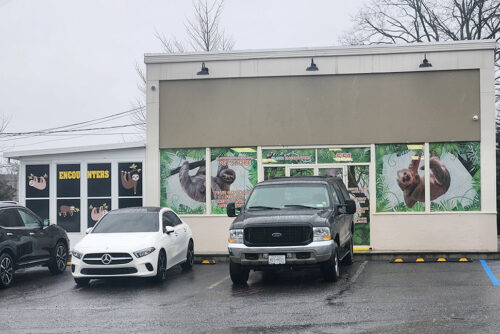
A fence extends along the southern border of the parking area and separates the Jackson Steel site from the adjacent former billiards parlor, which is now a $1 store. A narrow strip of unpaved soil is also located along the east wall of the building, between the building and the wooden fence separating the Jackson Steel property from the adjacent apartment complex.

Subsurface features include two dry wells designed to collect stormwater runoff located under the parking area to the west of the building and a third drywell is located under the loading area dock.

The site is bordered to the north by residential, single family dwellings, to the east by multiple-family dwellings in a two-story apartment complex, to the south by the former billiards parlor and a building that housed the Tutor Time Daycare Center until April 2002 when it closed and to the west by an office building and restaurant and the predominantly commercial properties along Herricks Road.

(Taken from the EPA's proposed plan)

The property was used from the mid-1970s until 1991 as a manufacturing facility where degreasers such as tetrachloroethylene (PCE), trichloroethylene (TCE) and 1,1,1-trichloroethane (TCA) were used at the facility until 1985. Sludges from degreasing equipment were stored in drums and in an on-site 275-gallon tank.

The analytical results from samples collected by the Nassau County Department of Health in the early 1990s from within, around and below three on-site dry wells indicated the presence of PCE, TCE, 1,1,1-TCA, 1,2-dichloroethane (DCA) at depths down to 40 feet below the ground surface. PCE, TCE, 1,1,1-TCA, 1,2-DCE and 1,1-DCA were also detected in groundwater samples collected from monitoring wells located downgradient of the dry wells.

In October 1999, the site was proposed for placement on EPA's Superfund National Priorities List (NPL). On Feb. 4, 2004, the site was listed on the NPL.

In January 2002, test results from air testing from the Tutor Time Daycare Center, Jackson Steel and a restaurant located adjacent to the site indicated that PCE levels in the indoor air of several room in the daycare facility were above the New York State Health Department's guideline for indoor PCE exposure. In addition, the maximum level exceeded EPA's acceptable non-cancer risk level. Low levels of PCE were detected in air samples from the Jackson Steel building and the restaurant.

After receiving the daycare center's results, EPA's emergency response team installed a vacuum extraction system under the concrete slab of the Tutor Time building to prevent any contaminants from entering the building in case the soil and groundwater under the building are the source. Samples taken to assess the effectiveness of the measure showed that the PCE levels in the air were significantly below the New York State Health Department guideline and below the EPA's acceptable non-cancer risk levels.

EPA also installed a vacuum extraction system under the concrete slab of the billiards building. Also a ventilation system was installed.

Since Jackson Steel is a Superfund site in need of cleanup, there was contamination found on the site from a remedial investigation conducted by the EPA from Oct. 2001 to Aug. 2002.

The soil at the Jackson Steel site was sampled at 33 locations. Ten of these locations were situated in unpaved areas and 23 locations were situated under the pavement. Volatile Organic Compounds (VOCs) were found at all locations.

Groundwater sampling was also taken for the Upper Glacial Aquifer. The highest total of VOC concentrations were measured in the monitoring wells located under the parking area. VOCs were also found at the middle of the Glacial Aquifer at the site. VOCs were also detected in the lower Magothy Aquifer.

Contamination in the surface soil poses a potential unacceptable risk to burrowing animals that may come into contact with the soil.

The EPA believes the site does not pose an immediate danger. Since the area is served by municipal water, which is treated before going into residential homes or businesses, it is not likely that the groundwater will be used for drinking in the foreseeable future, according to the EPA.

The results of the baseline risk assessment indicate that in its current condition, the site does not present hazards or increase cancer risks to trespassers and industrial/commercial workers.

However, the unremediated site may present hazards and increased cancer risks under potential future industrial and commercial use scenarios.

The EPA proposed a plan to excavate the contaminated surface soils, building trench, sumps and contents of dry wells; off-site treatment and/or disposal and treatment of VOC contaminated subsurface soils and building contamination. Such a cleanup is estimated to cost $2,383,000. The cleanup of the groundwater the EPA recommends involves treatment of the Upper Aquifer and groundwater extraction as well as treatment of the Lower Aquifer. Such a cleanup is expected to cost $4,159,000 to $4,425,000.

While the remedial investigation and proposed plan was funded, the cleanup of the property may not be. There is no money earmarked for the actual construction of the cleanup. The National Remedy Review Board will decide what projects will be funded. The fiscal year for the Superfund is October 1, 2004 to Sept. 30, 2005. If no money is designated to the cleanup, then the site will remain as it is now.


LongIsland.com Logo
An Official Newspaper of the
LongIsland.Com Internet Community


| antonnews.com home | Email the Mineola American|
Copyright ©2004 Anton Community Newspapers, Inc.
All Rights Reserved.

LinkExchange
LinkExchange Member

Farmingdale Observer Floral Park Dispatch Garden City Life Glen Cove Record Pilot Great Neck Record Hicksville Illustrated News Levittown Tribune Manhasset Press Massapequan Observer Mineola American New Hyde Park Illustrated News Oyster Bay Enterprise Pilot Plainview Herald Port Washington News Roslyn News Syosset Jericho Tribune Three Village Times Westbury Times Boulevard Magazine Features Calendar Search Add An Event Classified Contacting Anton News