Terrified, a woman arrived at the offices of the Hispanic Counseling Center pleading in her native tongue for help. The man who ritualistically sexually abused her daughter was threatening to return.
The woman's daughter and son believed they had found their own solution. If their tormentor were to return they would take their own lives in an act of desperation, a suicide pact.
Faced with the abject horror of the situation, the Hispanic Counseling Center (HCC) instantly went into action to save the lives of this family, knowing they were the only ones who could help.
The experienced social workers of the HCC, well versed in the Hispanic culture and its people, set about assisting this woman and her two children through their therapy programs. They also secured child care so the woman could start a new job and they even convinced her landlord to give her more time to pay her overdue rent.
"It all worked out," said HCC Domestic Violence Program Coordinator Irene Ingham, ACSW, "That is what we do. We do it all the time."
Established 22 years ago, the HCC offers services designed to meet the needs of newly arrived Hispanic immigrants. It is the only licensed agency of its kind on Long Island.
The center started in 600 square feet with a staff of approximately four and provided counseling for Hispanics who suffered from substance abuse.
"It was put together by a small group of social workers for a seriously underserved group of people," said Rita Pollio, HCC director of development.
To meet the needs of their clients the center acquired the proper licenses and developed psychiatric and mental health programs as well as other family and youth programs all staffed by bilingual and bicultural staff members.
"(The programs) all grew out of need," said Pollio.
Currently, the HCC serves between 500 and 700 clients a month with nine programs (including the soon to be initiated daycare program) and a staff of 40 in 20,000 square feet on the fifth floor of 175 Fulton Avenue in Hempstead.
Money to support the center comes from state and county grants, client fees and fund raising. Eighty five percent of the money goes to the client services and 15 percent goes to administrative costs.
HCC accepts clients of any ethnic background, however the services target Hispanic Long Islanders.
"We developed programs for the Latino population, so they can become good citizens in the community," said Esperanza Yepes PhD, chairperson of the board of directors for HCC.
The goal is acculturation for those Hispanic residents who do not speak English and are unaccustomed to American life, people such as immigrants.
Driven from their home countries in South and Central America by war and by famine Hispanic immigrants travel to the United States for the same reasons immigrants have been for two centuries, a better life.
New York has the third largest Hispanic population in the United States with nearly 14 percent of the population hailing from the roughly 21 countries considered Hispanic, according to the 1990 census.
Hispanics make up 8 percent of the population on Long Island, and in areas such as Hempstead, the number of Hispanic residents makes up as much as 19% of the population.
The number of Hispanic residents in Nassau County is up 344 percent since 1970 and 37.4 percent since 1990.
On the verge of a new census Pollio said she thinks an even greater Hispanic population will be revealed.
With the greater population comes a struggle to find shelter and the issue of illegal housing.
A problem that plagues public officials for the tax dollars it costs and the safety hazards it creates, illegal housing is sometimes the only option to Hispanics who have come to this country to take low wage-earning positions.
Manual labor has been a staple profession for immigrants over the years, however in modern times there is no great need for such positions to be filled.
Uneducated immigrants, who in some cases do not even speak the language of their home country let alone English, must compete for the few manual labor jobs available.
Even those with jobs, oftentimes do not have insurance and they have nowhere to turn if not for agencies like the HCC.
In turn HCC makes itself available to help with problems affecting the entire Long Island community.
Recent gang-related incidents in communities like Mineola, Glen Cove, Port Washington and Westbury have caused a great deal of concern to the residents of Long Island.
Serious crimes attributed to gangs with names like MS 13, a gang with Salvadoran roots, and Las Nietas which originated in the Puerto Rican prison system, have fostered terrible impressions of South and Central American immigrants.
However, public officials such as the police are quick to note that the Hispanic youth are the ones in immediate danger, often finding themselves the victims of the crimes the gangs commit.
HCC Executive Director Gladys Serrano, CSW has been working with the District Attorney's Office and the Hempstead Police Department to deal with the issues of gangs.
HCC provides support and education to Hispanic youth and their parents. Primarily the agency offers those involved an opportunity to discuss their problems in hopes of finding them viable and safe alternatives to gang life.
"We are trying," said Serrano, "It is not an easy thing to do. This is the center for the family and we want to help."
To effect change in issues like gangs and illegal housing, HCC has made itself available as a source or information on the Hispanic population. In return they hope to see support from the community.
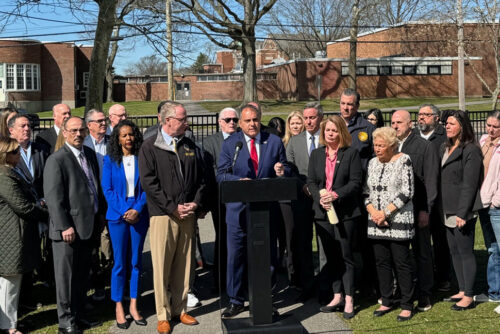
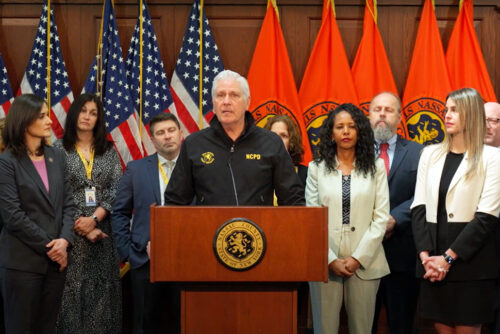
Last Friday morning HCC hosted a legislative breakfast in order to better the relationship between the agency and public officials.
Several legislators including County Legislator Richard Nicolello and Assemblywoman Maureen O'Connell attended the meeting.
"What I envision for this agency, is expanding the services," said Serrano.
An expanded agency would better suit the needs of a growing population and help them contribute to the community and country that was built by immigrants who wanted to create opportunity for themselves and for those, like the Hispanic immigrants of today, who followed.
The Hispanic Counseling Center can be contacted at 538-2613.