News Sports Opinion Contents
News

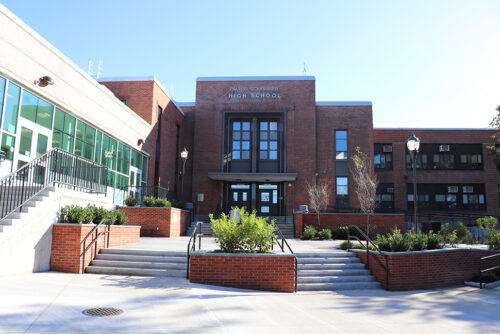
Parents have bad dreams about coming home from a much-needed vacation only to find that their house has been used by their kids for partying. Everyone knows that alcohol and underage kids can cause a myriad of health and safety problems, not to mention potential property damage, but a lesser-known aspect is what the law has to say about alcohol consumption by minors. A recent talk co-sponsored by the Coalition Against Substance Abuse (CASA) and the School Community Association (SCA) on Jan. 26 at the high school sought to educate parents about this issue.

"In a world where six out of the 10 of the Super Bowl advertisements are for beer companies and we talk about colleges being rated as top party schools," said Laura J. Granelli, an attorney with Jaspan Schlesinger Hoffman LLP and the night's presenter. "It becomes extremely difficult for our young students to make very responsible decisions about alcohol."

In her presentation, Ms. Granelli used statistics from the Partnership for a Drug-Free America to illustrate the problems of underage drinking. In the last month, she says, about 10 million Americans between ages 12 and 20 have had an alcoholic beverage. Two-thirds of teenagers who drink say they can buy their own alcohol. Alcohol and drug use have been associated with the leading cause of death and injury in teenagers and young adults. There was one positive statistic, however; teenagers whose parents talk to them about the dangers of drugs are 42 percent less likely to use drugs than those whose parents don't. However, only one in four students report having that conversation with their parents.

Beyond the health risks associated with underage drinking, there are consequences for both the drinker and his or her parents if they consume alcohol under the legal age. Violations can range from fines to suspension of driver's licenses and community service.

One of the big issues Ms. Granelli touched upon was social host liability. Parents who serve or allow alcohol to be consumed while hosting a party can face penalties. Ms. Granelli also brought up the interesting case of Rust v. Reyer, where a high school student had a party at her house without her parents' knowledge or consent. Alcohol was served and someone was injured from a fight. That person sued the student and her family, and nine years and $90,000 insurance dollars later they were still found liable for damages.

Another case was Lane v. Barker, where the parents of another student allowed alcohol to be served at a party that they knew people under the age of 21 would attend. A fight occurred and someone was injured. The courts found the parents were responsible because they knew that underage drinking would occur and that they have a responsibility to ensure the safety of those on their property. Permission for minors to drink does not absolve the parents.

A question-and-answer session for the parents in attendance was held.

Noting that in some civil cases only a teenager can be held responsible, a parent asked what kind of penalties would be assessed against a mere teenager. "It goes back to you," said Ms. Granelli.

"Parents are ultimately liable and it is still in essence a family liability." She went on to say that the family's assets would be at risk even if the parents were not being held responsible.

Another parent asked if the Manhasset High School was doing anything to combat underage drinking. Principal William Stark said that there was a code of conduct for all MHS students and it applies even when

11th and 12th grade students leave school during the day for lunch. "The message that they [the students who leave school for lunch] are given is essentially that anything you do off campus, it's as if you've done that in the principal's office," he said.

Since prom time is coming up soon, the issue of private limousine services that offered alcohol in their limos was brought up. Mr. Stark explained that he has a policy of "trust but verify" when it comes to limos having alcohol, in that he's given verbal assurance by company officials that there will be no alcohol in their limos. Nevertheless, he still has the limos searched when they come to the school and sends them back if they are found to have alcohol in them.

A suggestion was brought up that civil and criminal liability for parents and the students should be included alongside the films and lessons in health classes. Ms. Granelli also advised parents to check their insurance policies to see if they were covered in lawsuits brought about because of underage drinking on their property. A parent summed up the night's message by saying, "It's really our responsibility. Schools can do so much, it comes back to us."

Prior to the meeting, it was announced that William Stark will retire as principal at the end of the 2005-06 school year. He will be succeeded by Richard A. McMahon, the current middle school principal, meaning that both the high school and the middle school will be overseen by the same principal.

The Coalition Against Substance Abuse will hold a presentation for its Wellness Week on Monday, Feb. 13 at 7:30 p.m. at the Black Box Theatre in Manhasset Middle School.


LongIsland.com Logo
An Official Newspaper of the
LongIsland.Com Internet Community


| antonnews.com home | Email the Manhasset Press|
Copyright ©2006 Anton Community Newspapers, Inc.
All Rights Reserved.

LinkExchange
LinkExchange Member

Farmingdale Observer Floral Park Dispatch Garden City Life Glen Cove Record Pilot Great Neck Record Hicksville Illustrated News Levittown Tribune Manhasset Press Massapequan Observer Mineola American New Hyde Park Illustrated News Oyster Bay Enterprise Pilot Plainview Herald Port Washington News Roslyn News Syosset Jericho Tribune Three Village Times Westbury Times Boulevard Magazine Features Calendar Search Add An Event Classified Contacting Anton News