By Sophia A. Niarchos
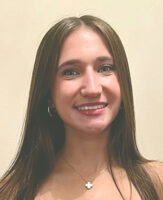
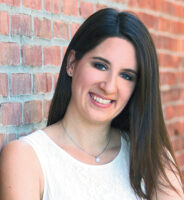
For the last two years, Manhasset High School students Alexander Vinberg and Winston Wang have been hard at work at Brookdale Hospital in Brooklyn. The two students gave up soccer, surfing, summer vacations and Sunday family time to contribute to medical research.
On Nov. 17, their efforts were rewarded at Carnegie-Mellon University in Pittsburgh, PA, when, after two days of poster and Powerpoint presentations, under the watchful eye of university judges, they were selected by Siemens-Westinghouse as the winners of the Middle States Region 2001 Science and Technology Competition. For a silver medal and a shared scholarship prize of $3,000, Vinberg and Wang competed against two other teams from the region, having been selected from a national group of nearly 300 semifinalists who made the grade out of more than 1,000 initial competitors. The two young scientists will compete against other regional winners for the gold medal in Washington, Dec. 1-3, where they may win from $10,000 to $100,000 in national prizes.
At the welcoming dinner before the final presentations, Siemens Foundation Executive Vice President Herb Carter explained why, despite the September 11 tragedy, it was decided that the competition would go on as planned.
"... [W]e realized the best way to help our country was to follow the advice of our government leaders and continue to move forward with our plans as scheduled. When we focus on our country and all its possibilities ... we honor one of the very foundations upon which this country was built - and to which we hold dear ... and that is the freedom to choose to live up to our fullest potential as individuals, as team players and as Americans ....
"J.B.S. Haldane, the eminent British geneticist, once said, 'We cannot predict the future, but we can invent it...,' Carter said, thanking the students for their role in "helping to invent the future."
Before announcing the winners, Lead Judge Victor Weedn said the finalists "were judged not as high school students but as university graduate students.
"They were questioned as if they were Ph.D. candidates giving their dissertation presentation," he said, adding that "the world would sit up and take notice of their work."
During the course of their research, Vinberg and Wang identified the cells in the peripheral blood - the blood that circulates - that produce thrombopoietin, a chemical in the body that causes platelets to form. Their work has implications affecting the understanding of disease development in patients with such illnesses as HIV and leukemia.
"The most interesting part of our work was reading scientific journals and knowing our work would have a real significant effect on how people will live in the future," Alex Vinberg said.
The team's research could be applied toward future treatments of thrombocytopenia and as the first step on a path for diagnosing it.
Winston Wang, who said he hadn't minded giving up summers to do research, said he would continue in research on the road to becoming a doctor, following in his father's footsteps.
"Genuine research experience provides me with a goal in my life and the opportunity to hit two or three medical fields that are out there," he said. "Research opens a lot of doors and lets you learn a lot," he added.
What the team learned from their experience was enough to take them to Tokyo, Japan, where they presented a scientific abstract of their work, compiled by their Brookdale Hospital team, to the International Symposium of Experimental Hematology, an annual meeting of professional researchers.
"They were dumbfounded that high school students were presenting an abstract equal to the caliber of professionals," said Alex.
"It is part of human nature to compete and want to be the best," said Norbert Gaus, president and CEO of Siemens Corporate Research, at the event's welcome dinner. Like competitors in such important events as the Olympics, the Pulitzer Prizes, the Academy Awards, and the Grammy Awards, which recognize the competitive aspect of human nature, he said, "you have set the standard and raised the bar."
This is not the first time the young researchers have demonstrated how much a part of their human nature competition is.
According to Peter Guastella, their Manhasset High School science research mentor, Alexander competed in the Shipley-Ronal Science Competition as a mere freshman and placed third with a water tunnel he built with two other Manhasset High students, Patrick Bennett and Shodai Noguchi.
"To this day, the water tunnel is used at the school for fluid dynamics studies," Guastella said, adding that it is "difficult to win in the Shipley-Ronal competition. Alex's team was competing with students from about ten Gold Coast schools, one-third of the best science research program schools in the country. His work was judged by M.D. and Ph.D. level judges."
Winston, too, has a history of experience in scientific competitions, having been a two-time winner of the National Duracell Inventions Competition. As a freshman, he created a biofeedback device intended to help tennis players improve their grip. The following year, he rewired an electric door for a car to incorporate a carbon monoxide detector. When carbon monoxide levels in the car are too high, Guastella explained, its windows automatically open.
It is likely that Alexander and Winston got their scientific inspiration from their family trees. Alex's brother Joakim, currently a sophomore at Stamford University, created a computer model for HIV as a high school senior, leading to his becoming a regional semifinalist in the Siemens-Westinghouse Competition. His father has found ways to apply research to solve problems in practical areas connected to computer programming.
"What I find impressive in young people's research is that they can take knowledge from one field and combine it with knowledge from other fields," the senior Vinberg said. He noted that it was less likely for those with extensive experience in research, who tend to become very focused in one aspect of that work.
As for Winston, his father is a physician, and his sister, Sunny, was Manhasset High's first national-level semifinalist when the school first entered the Westinghouse Competition in 1991.
"It is a wonderful opportunity to run a program in which you see children from families compete," said Guastella. "When you've got high school students doing this now, imagine what they'll be doing in the future," he added.