News Sports Opinion Obituaries Contents
News

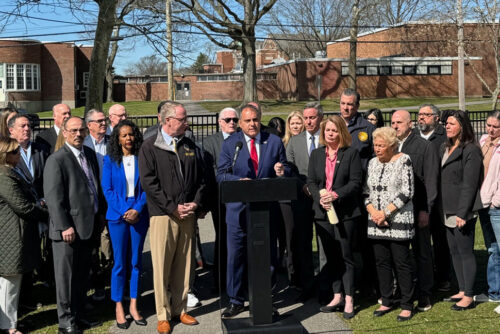
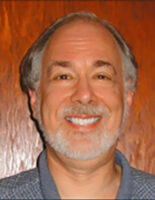
Msgr. John McCann, Rev. Thomas Hammond, Rev. Leslie Hughs, Rev. Jimmy Only, Rev. Stuart Clark.

Last week, before a gathering of Christian, Jewish and other religious leaders, President George W. Bush announced the creation of a White House Office of Faith-Based and Community Initiatives. In a second executive order, he directed the Justice Department, the Department of Education and other federal agencies to help bridge the gap between government and the independent sector. It all sounds reminiscent of the former President George Bush's "thousand points of light."

Meeting Rev. Thomas Hammond, pastor of Manhasset's Church of Our Saviour, Lutheran, we asked him for his opinion of the plan. In response, he said that a meeting of the Manhasset Clergy Association was to be held at his church that Thursday and invited us to attend the meeting and talk to representatives of the different churches. We were happy to take advantage of the invitation to get the opportunity to talk with these influential individuals. Present at the meeting were Rev. Hammond, Rev. Maurice Fetty and Rev. Jimmy Only of the Manhasset Congregational Church, Rev. Stuart Clark of the Community Reformed Church, Msgr. John J. McCann, pastor of St. Mary's Roman Catholic Church, Rev. Leslie Hughs, pastor of Christ Episcopal Church, Janet Palmer, clerk of the Manhasset Friends Meeting and Dr. Richard Engebrecht, minister of outreach at Church of Our Saviour, Lutheran. All Manhasset churches and temples are invited to send representatives to these monthly meetings but not all are able to attend every month.

In answer to our question as to their reaction to President Bush's so-called "faith based initiative," Rev. Only said that he regards the separation of church and state as very important. "Jefferson erected that wall," he said, "and removing bricks from that wall is frightening." Rev. Only said that he does not believe that the churches should get involved with government programs and he also fears that the president's plan is the beginning of the government turning its back on social causes. "Both church and government should be involved," he said, "but each should do its own thing." Rev. Only said he believes that under Bush's plan government programs will be underfunded.

Rev. Stuart Clark said, only partly in jest, "The government's job is to defend our coasts and deliver the mail. I agree with Jimmy."

Rev. Maurice Fetty remarked that "on the one hand, in America private volunteer organizations have made tremendous contributions, for example the Red Cross, and the somewhat religious organizations such as Catholic Social Services and the American Friends Service Committee. They are more effective than government. Of course certain organizations do receive tax dollars."

Msgr. McCann remarked that "It's already happening. In western society all social programs began with the church and many good things came of it." Ms. Palmer remarked that the president's language was "fuzzy." "Faith based," she said, "what does that mean? Many 12-step programs talk about God. Would that make them faith-based? I agree with Jimmy. The result would be that government would certainly cut back funds from social programs." Rev. Only rejoined that once government entered the picture they would start making regulations about the standards of such things as soup kitchens. Msgr. McCann added that as things are today religious organizations have to follow certain government regulations. "The difference is," he said with a smile, "with us you get more bang for the buck."

Rev. Fetty said that his concern is in the other direction of too much government intervention, "the camel's nose in the tent." Pastor Hammond agreed, adding, "It could be especially dangerous for smaller groups. I'm especially opposed to government deciding what is a church. What about colleges, universities, nursing homes? Would government have a say about those?"

Father Hughs said, "I'm the resident cynic. My first question is why? Why does he want to do this? I think it's to save taxpayers money. In that case, who pays for the services? If not the taxpayers, it will be the churches. Religious groups can only reach a certain segment of the population. People fall through the cracks."

Rev. Fetty agreed, but added that the churches are often far ahead of government in their social programs. "I personally have more confidence in church-based organizations." Father Hughs agreed but said that he is concerned that government will give up its role. "There are certain things that only government can do and other things that I'm not sure government is good at. It's a mixed bag." Rev. Only shares those concerns. "Each sector does different things well," he said.

That seemed to be the general consensus. The churches have a significant role to play but they neither want government to tell them how to play it nor do they believe they can replace the role government plays in taking care of the needs of people. Rev. Clark had the last word. "What happens when the ACLU challenges all this in court?"


LongIsland.com Logo
An Official Newspaper of the
LongIsland.Com Internet Community


| antonnews.com home | Email the Manhasset Press|
Copyright ©2001 Anton Community Newspapers, Inc.
All Rights Reserved.

LinkExchange
LinkExchange Member

Farmingdale Observer Floral Park Dispatch Garden City Life Glen Cove Record Pilot Great Neck Record Hicksville Illustrated News Levittown Tribune Manhasset Press Massapequan Observer Mineola American New Hyde Park Illustrated News Oyster Bay Enterprise Pilot Plainview Herald Port Washington News Roslyn News Syosset Jericho Tribune Three Village Times Westbury Times Boulevard Magazine Features Calendar Search Add An Event Classified Contacting Anton News