Farmingdale ObserverFloral Park DispatchGarden City LifeGlen Cove Record PilotGreat Neck RecordHicksville Illustrated NewsLevittown TribuneManhasset PressMassapequan ObserverMineola AmericanNew Hyde Park Illustrated NewsOyster Bay Enterprise PilotPlainview HeraldPort Washington NewsRoslyn NewsSyosset Jericho TribuneThree Village TimesWestbury TimesBoulevard MagazineFeaturesCalendar SearchAdd An EventClassifiedContacting Anton News
NewsSportsOpinionObituariesContents
News
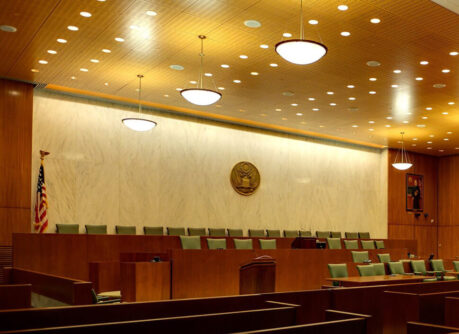
"It seems to me that the best plan is no plan, and to just do nothing, because any plan is 40 years too late," was just one strong sentiment expressed by more than one of those who spoke at the Nassau Hub Study Hearing held last week at the Legislative Chamber in Mineola. The room was packed for the Hub public hearing to discuss the recently released Nassau Hub Study, produced by the Long Island Regional Planning Board, in conjunction with the Regional Plan Association..

The meeting was under the direction of 9th District Legislator, Richard Nicolello, of New Hyde Park, who is the chairman, Committee on Planning, Development and the Environment. Nicolello, at the outset, introduced his committee sitting with him on the dias including: Vice-chairman, Legislator Sal Pontillo, of Farmingdale, former planning commissioner for the Town of Oyster Bay; Legislator Dennis Dunne, of Levittown, former commissioner Department of Veterans Affairs; Legislator Norma Gonsalves, a former civic activist from East Meadow; Legislator Judy Jacobs, of Woodbury, also a civic activist; Legislator Lisanne Altmann, of Great Neck, with a strong civic activist background; Legislator Darlene Harris, who represents Uniondale and she, too, has a strong activist background.

Nicolello said, "As you can see this committee has a pretty broad base of representation of the county and a broad base of experience in development in the community."

Nicolello continued, "Tonight, our committee and the Nassau Legislature is taking another step in filling the 'mission' to provide greater scrutiny and public participation in country affairs and county government.

"We believe that it is vitally important that public participation be part of this Nassau Hub Study. This is not the first study that has dealt with this area of Nassau County, " said Nicolello. "The study itself reports that there were at least five other studies performed. The first one chaired by Robert Moses in which they developed a plan for Mitchell Field. The second in 1966 they developed a plan for a Nassau Center, developed by the Nassau County Planning Commission. The third study was performed in 1968 and 1969. The fourth in 1971 and in 1984 an Environmental Impact Statement was prepared for Mitchell Field."

Nicolello said, "By and large, I believe, that these studies, or what they intended to do, in respect to transportation and the effect on our downtown businesses, failed. As the report says, "The development in the Hub area has been haphazard and bears no basis to any sort of rational planning." Buildings and activities are different from place to place. I believe there has been a failure to plan for traffic. I believe there has been a failure to plan for the impact on downtowns. As we deal with these results, it is important that we get the broadest possible public involvement and that we get our public officials involved at the earliest possible date."

Nicolello then introduced New Hyde Park resident, Paul Ponessa, director of the Nassau County Planning Commission.

Ponessa said, "The study that we are going to look at is part of a Traffic Management Study that will really impact the entire county, if not the whole metropolitan area. The study really started as a result of the privatations committee mission to develop a new coliseum. As part of that we had to study transportation. As a result, money was set aside, $200,000 by the Nassau County Industrial Development Agency and the Town of Hempstead IDA to commission the study with the Long Island Regional Planning Board as its primary consultant. In addition the Regional Planning Association and New York Institute of Technology participated in the study."

Ponessa continued, "What our department has done, over the past year, is a comprehensive master plan, which is different from the Hub plan which is a micro-section of the county and we plan to incorporate recommendations that are put forth at this hearing into our master plan."

Steven Latham, commissioner of Commerce and Industry added, "Our job is to identify and provide to the legislature and to the public a series of alternatives to both mitigate and ameliorate the traffic problems that have developed due to the past planning and development practices. There is still a great deal of land available, within the Hub, and we would hope that through the analysis provided by the consultants solutions can be found. . There are nine separate methods of moving people around the area. The representatives from New York Tech have two alternatives for elevated systems. None are cast in concrete. They are provided for us to look at to see if they achieve the goals that will mitigate how to move people. Plus, what is the cost and what is the impact on the community and how do they shape the future development of the parcels that are now vacant or perhaps the redevelopment of the parcels that may change from warehouse to office, etc."

Nicolello wanted then to know if there was a pool of money obtained by Senator Alphonse D'Amato. Ponessa said that he did have a memo stating that $500,000 has been set aside and earmarked for the hub study.

Dr. Lee Koppelman, director of Long Island Regional Planning Board came forward to explain the actual plan.

Koppelman said, "Let me set the stage of the actual plan. The area that we refer to is the "Nassau Hub", which is not an original title, the word hub has been around for several decades to describe this general area. It is an area of 2.9 square miles or a little less than one percent of the total land area of Nassau County. One percent of the land area constitutes the largest suburban land development in terms of mixed uses in terms of industrial, educational, institutional and retail shopping as well as warehousing that can be found anywhere in the United States."

Koppelman continued, "In fact, we looked, at the onset of the study, to see if we could find similar examples, instead of having to 'reinvent' wheels to take advantage of any wisdom that might exist anywhere in the United States. It was somewhat of a surprise to learn that no other place compares with this area."

Koppelman went on, "We looked at other areas, for example White Plains, which most people associate as a major suburban area, but you could take the entire White Plains suburban and commercial area and put it in one corner of the Nassau Hub. In looking at examples in the United States you could look at all of them and put them into the Nassau Hub and have land left over."

"In terms of the existing situation at the Hub, " said Koppelman, "I think it is important to stress that this area developed over a period of numerous decades, in fact, almost over the last half-century. Granted a good deal of the development took place in the last 20 years, but it started well before that."

He went on, "I stress that because it is easy to be a critic and say well it could have been planned better, etc. But, the truth is it has a history to it and we have to live with that history."

"There are currently 44,000 jobs within the area called the Hub. That means a little over seven percent of the entire labor force that works in Nassau County is employed within this small geographic area. In doing our demographic projections, which is what we have to do, we looked at a number of scenarios," added Koppelman.

Koppelman went on, "But, before we looked at a 2020 scenario the first question we addressed was, what would occur at the Hub if no unit of government does anything? In other words, are there elements that could take place without any further input from government in terms of zoning, etc. For example, the large tract that constitutes Roosevelt Raceway has already received approval in terms of the mixed uses that are planned for that area.""The county commitments to museum row are basically in place. There are several other developments that are also basically in place. When we looked at those developments that are already committed, that constitutes an additional 10,000 employees. Now, in looking at several other scenarios for the future, including the one we have called the 21st Century Scenario, it was clear to us that just considering the almost 70 acres that Nassau County still owns, in terms of the Nassau Coliseum and the vacant land that surrounds it, which ostensibly, will probably be the subject of negotiations between the county, the privatization committee and the Millstein/Gluckstein combination which recently acquired the takeover of the Islanders. The question of that land and how it will be handled adds additional development to that site," said Koppelman."What this means," said Koppelman, "is that existing transportation problems, in Nassau County, in general, and surrounding this site, in particular, constitutes almost a strangulation situation at certain hours of the day. We are an automobile-oriented society and I don't believe that is going to change. With the development that is going take place it is almost inescapable that there will be an increase in auto traffic. The question then is, what will that impact be and are there better ways of handling it? That was basically our assignment."

Koppelman continued, " We broke it up into several sections. There is no question in my mind, or my colleague's minds, in terms of planning, that the only sensible alternative is some form of mass transit. In the short term, we did look at the question of expanded bus service. The limitation to relying on bus service, however, is that it relies on the existing road network and we don't feel there are enough additional lanes for passage, certainly in the segment around and surrounding the Nassau Hub. Most of the real estate that has been developed is virtually on the sidewalk in most cases. If we go to some form of mass transit, it won't be a panacea. There will inescapably be more auto traffic. What we can only hope is that if a rational mass transit system is put in place, it will somewhat mitigate the overloading for the future."

Koppelman explained that his group looked at several mass transit alternatives, but made no definite decision, because that is up to both the public and the political process. He said they identified those alternatives they thought could be workable.

Koppelman said that since there is land still to be developed or redeveloped the second section of the study is a land-use analysis from a standpoint that now that there is an opportunity to do some planning, which did not exist 40 years ago, that perhaps there is a better way to utilize the vacant and even the land subject to redevelopment in a more intelligent way that would be more "friendly" in utilizing some form of mass transit.

Legislator Gonsalves wanted to know where the college students fit into the study. Koppelman said, "Take Hofstra, there are a certain amount of students who reside at the college who are predominantly in and around the Hub. That is one of the things we are trying to address. We want the students at Hofstra who want to go to the coliseum or shopping, to do so by means of mass transit."

He expanded on that by saying, "There is a variety of movement in that area. Including the faculty, the students, the people that work at Nassau Community and Hofstra, the employees in the office buildings of EAB, the workers and shoppers at Roosevelt Field and The Source or to at any of the retail commercial establishments along Old Country Road."

One of the most controversial parts of his plan, however, was the construction of a railroad station, in Carle Place, in the vicinity of Glen Cove Road and Old Country Road, next to the Toys R Us complex, which Nicolello pointed out was the site of the Carle Place Water wells.

Dr. Paul Koch, of the New York Institute of Technology presented "The People Mover Study."

The group explored various modes of transportation and then presented one they seemed to favor most, a People Mover. It is car that fits four, that travels either above ground or at ground level on a monorail. Dr. Koch explained that it was relatively inexpensive and would move folks totally throughout the Hub section, crisscrossing over the streets and winding its way from Roosevelt Field to the coliseum, the colleges and link down around into the Village of Hempstead.

One civic activist wanted to know just who would use a "people mover." He said that he could just see it-a family parks its car at the station and hops on the people mover, dad with golf clubs headed for Eisenhower Park, kids with equipment, to play soccer at Eisenhower Park and mom shopping bound. They all meet, at the end of the day, back at the "people mover", dad with clubs, kids with equipment and mom now laden with packages. They stop for dinner and have to lug all of their equipment off the "people mover," into the restaurant and then after dinner back onto the "people mover" to return to the car! The activist said, "It will never happen!"

Hempstead Mayor James Garner asked the committee to please include the Village of Hempstead and its revitalization efforts in the plan.

Westbury Village Mayor Ernest Strata said, "The study regarding the Hub area and the proposed people mover system, in the opinion of the village is, 'Closing the barn door, after the horse is out!' In the opinion of the Village of Westbury it would only aggravate an already serious condition and pose an even more serious impact for us to deal with."

Strata continued, "In our opinion, our village has historically borne the brunt of poor planning and overdevelopment with little if any real concern for the accommodations necessary to handle the saturation of the area by people and vehicles. To further add insult to injury, revenues realized for years by the county being generated by sales tax in the subject area have never been shared with the Village of Westbury or its neighbor villages. Today, in spite of this gross inequity and unfair situation the Village of Westbury has again become the target for a 'grandiose' plan for the future and we fear the drastic results that such a plan may create for the village."

Strata continued, "It is vital that the welfare of all residents of Westbury be considered. A coalition of the villages of Garden City, East Williston, Mineola, Old Westbury, Westbury and Williston Park has testified, publicly, over the years that any further development of all the land in question calls for an area-wide study of the potential impact on the environment under the provisions of the State Environmental Quality Review Act (SEQRA). The Village of Westbury underlines its wholehearted support for this position, especially with respect to traffic."

Strata added, "There must be included in the environmental review adequate traffic surveys and analysis of the likely traffic and traffic-related air quality impacts foreseeable as a result of all of such proposed developments. This has not been done to date as Frederick P. Clark Associates has apparently confined its traffic surveys and impact projections to the area of the Town of Hempstead and has failed to take into account the drastic traffic and air quality impact which will be experienced in the adjoining area of the Towns of North Hempstead and Oyster Bay lying north of Old Country Road. It is imperative to include in any traffic and traffic-related air quality impact study area at least that portion of the Town of North Hempstead lying north of Old Country Road and extending as far north as Northern Boulevard."

Strata ended his comments by saying, "In the meantime, the Village of Westbury will insist by every means available, including SEQRA, that there be a traffic flow management policy and action plan for central Nassau County coordinated among New York State, Nassau County and the Towns of Hempstead, North Hempstead and Oyster Bay before any further development takes place in the Hub, Roosevelt Raceway/Mitchell Field areas."

According to Nicolello, the next step is to apply for federal money that is allocated for transportation projects and studies and then to implement as environmental plan known as SEQRA to study, in depth, the effects of the traffic in the area.


| antonnews.comhome |
Copyright ©1998 Anton Community Newspapers, Inc.
All Rights Reserved.
LinkExchange
LinkExchange Member