News Sports Opinion Obituaries Contents
News
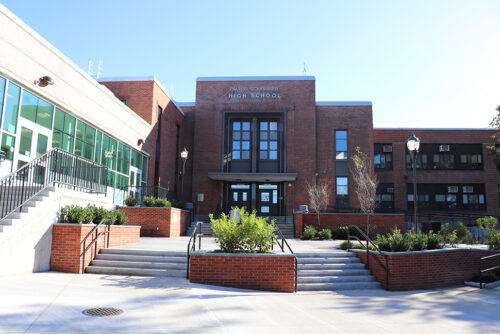
On Tuesday, May 16, from 7 a.m. to 10 p.m., at the E. M. Baker Elementary School and South High School, qualified residents of the school district will vote on the 2006-07 proposed school budget and on two board of education seats.

After extensive public discussion and input, during a lengthy and open budget process, the board has adopted the proposed school budget (also known as the General Fund Operating Budget) in the amount of $162,315,000 for the 2006-07 school year. The increase over last year's budget is 6.47 percent, essentially due to increases in mandated items. Because of the low level of state education aid received by the district, the amount to be raised by real property tax translates to an increase of 6.79 percent.

In Nassau County, boards of education are not legally permitted to set actual tax rates and assessments of property. This is done by the county, based on its assessed valuation of property in the school district. Each year, for the past several years, Nassau County has changed assessments and tax rates for virtually everyone. Therefore, there is no meaningful way to predict what impact the increase will have on an individual's property tax.

To minimize the impact of Nassau County's shift of property tax burdens to homeowners and away from businesses and utilities, the Great Neck Board of Education has been proactive in promoting legislation to cap the annual increase caused by the shift. For the past several years, the shift has been limited to 2 percent, instead of the allowable maximum of 5 percent. This year, the school district is hopeful that pending legislation will be adopted to cap the shift at 1 percent.

The 2006-07 budget supports educational programs and provides services that are essential for achieving excellence in the school district. Board President Lawrence Gross said, "Through a long, interactive, collaborative process, we have fashioned a budget that allows us to meet the individual needs of each child. In early fall, the budget process starts with a needs assessment by each school. Eventually, a budget is formed that is responsive to educational, maintenance, and security needs throughout the district. Instruction is our first priority and, as a result, it receives the largest allocation-almost 75 cents of every dollar goes for instruction. The budget provides the resources and programs we require while being mindful of financial pressure, which is the greatest problem we're all facing. We have tremendous concern and awareness of the impact of taxes on our residents. This budget is a fiscally responsible expenditure plan that will continue excellent education in Great Neck without being excessive."

Board Trustee Donald Ashkenase said, "We go through the budget with a fine-tooth comb. We squeeze out every dollar without compromising programs. The things we have control over, we very tightly control. The things we have no control over drive the budget up." He explained that the district has no control over the following items, all of which have increased dramatically and constitute roughly half of the total budget increase: Social Security, pension funds, workers' compensation, health insurance, Medicare reimbursements, and power and fuel. State aid does not keep up with these year-to-year increases.

Mr. Ashkenase, referring to an extremely favorable report by the external auditor of the school district (presented by the accounting firm of Coughlin, Foundotos, Cullen, and Danowski, at the March 6, 2006, board of education meeting), said, "We gain tremendous comfort in hearing from a reputable external source that our internal control structure is very, very strong, that our school district is in a good financial position, and that our budget is very tight."

President Gross explained that, since the 1990-91 school year, the student population has grown by over 16 percent and the special education needs have increased. Projected enrollment for September 30, 2006, is 6,168, an increase of 53 students over the current school year. He said, "This requires additional staffing, particularly if we are to maintain small class size, which is at the heart of our educational program. The cost of additional staff is financed largely by retirements, since new educators are hired at significantly lower salaries." The district will save more than $500,000 this coming year due to the retirement of teachers and administrators.

The school district is required to provide a substantial number of government-mandated services, yet the federal, state, and county governments that impose these mandates do not provide sufficient aid to meet their costs. For example, there is insufficient state funding for mandated testing, so significant associated costs must be borne by the district.

Board Vice President Judi Bosworth elaborated, "We have yet to recover from the 1989-90 mid-year budget cut in state aid, which drastically reduced funding. Seventeen years ago, before the cut, state aid had been 11 percent of our budget; now, it is 4 percent and we have many more mandates to fund. Today, our district is receiving almost $2.5 million less in state aid than it did 17 years ago."

The state-mandated Building Condition Projects (RESCUE), imposed five years ago, addresses infrastructure needs of the buildings, which range from 41 to 89 years old. RESCUE is now an ongoing annual requirement, with an allocation of $1,300,000.

The district is mandated by state law to provide transportation to students who reside here but attend more than 100 private, parochial, and special-education schools at a cost of $4,200,000. Over the years, state aid to the district for transportation has plummeted from 90 percent of the total cost to 6 percent.

A total of about $9.5 million in revenue is anticipated in 2006-07 from various sources, including Adult Program fees and grants, summer program fees, rental of space in school-district buildings by community groups, and state aid.

Fees for the district's summer programs are again raised by 10 percent, continuing the board's goal of reducing the impact on taxpayers by increasing the cost paid by program participants. This summer, it is anticipated that about 75-80 percent of total program expenditures will be recouped from fees.

In addition, the Great Neck school district has entered into a number of cost-saving cooperative ventures with neighboring districts, particularly in the areas of insurance, transportation, and purchasing (equipment, food items, supplies). The largest and most successful of these ventures continues to be the New York Schools Insurance Reciprocal (NYSIR). Through NYSIR, 347 school districts provide a sound, stable, and responsive property and liability protection program for each other at greatly reduced rates, resulting in tremendous savings over the years. Great Neck was a leader in the formation of NYSIR.

Efforts continue to effect energy savings for electricity, fuel, and communications. At its meeting of Feb. 6, 2006, the board of education approved the contract for an extremely cost-effective, computerized, Fiber Optic Wide Area Network (WAN) that will connect the entire district with an upgraded, high-speed, digital telephone system, an upgraded data network, and a video security system. Its capabilities will greatly enhance communications performance in the district and benefit the education and safety of our students. The installation of the new system and its annual costs are eligible for Federal E-rate reimbursement. President Gross said, "This is a very prudent enterprise. It will upgrade what we have and pay for itself in savings over time. We are constantly looking for ways other than taxation to fund worthwhile initiatives such as this."

Also being studied is a cost-effective, energy-enhancing performance plan that would replace aged boilers, some more than 50 years old, with boilers that are a quarter of the size and five times more efficient. It is anticipated that savings would be $800,000 to a million dollars annually.

The district recently purchased its first hybrid vehicle, a Honda Accord, which is licensed as a school bus and is now considered part of its fleet of mini-buses. It is used, primarily, to transport severely handicapped youngsters to and from residential schools that are a long distance from Great Neck. The hybrid has proved to be more fuel efficient, cheaper to run, and safer for the environment.

Vice President Bosworth stated that excellent record-keeping by the district has resulted in substantial reimbursements. As examples, she cited a summer program for students with autism and related disabilities, E-rate funding for Internet and telephones, and asbestos abatement.

The Great Neck Public Schools' budget includes expenditures that benefit some 1,562 students who reside in the district but attend private or parochial schools. Transportation, textbooks, and health services are among the items that must be provided to these students by the district according to state law. Copies of the 2006-07 proposed budget are available at the Phipps Administration Building, 345 Lakeville Road. Reference copies can be found in the schools and public libraries. For information about the proposed budget, please call 773-1456; for information about registration, voting, and absentee ballots, please call 773-1413.

LongIsland.com Logo
An Official Newspaper of the
LongIsland.Com Internet Community


| antonnews.com home | Email the Great Neck Record|
Copyright ©2006 Anton Community Newspapers, Inc.
All Rights Reserved.

LinkExchange
LinkExchange Member

Farmingdale Observer Floral Park Dispatch Garden City Life Glen Cove Record Pilot Great Neck Record Hicksville Illustrated News Levittown Tribune Manhasset Press Massapequan Observer Mineola American New Hyde Park Illustrated News Oyster Bay Enterprise Pilot Plainview Herald Port Washington News Roslyn News Syosset Jericho Tribune Three Village Times Westbury Times Boulevard Magazine Features Calendar Search Add An Event Classified Contacting Anton News