By Amy Edel
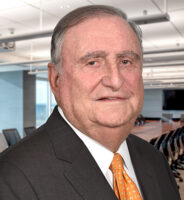
The architect recommended by the Citizens Advisory Committee, (also known as the Ad Hoc Committee, formed by the School Board to bring citizens with expertise in construction, architecture, law, and engineering, as well as those residents who were concerned about the program needs in the district, to develop a new bond issue for this fall) who was put forward as their choice for hire by the School Board at the June 2 meeting of the School Board has already begun the repairs of the Garden City Middle School roof over the gymnasium. On June 3, Committee Chairman Sullivan and Legal Committee member Maulk briefed Garden City Life on these recent developments.
The architect recommended by the committee is Peter Gisolfi and his firm, Peter Gisolfi Associates is the team working on the middle school's roof. Eight firms were sent a Request for Proposal (RFP) by the committee and five responded. After the proposal stage, three were "in the running" for the recommendation. After weeks of interviews and evaluations, the committee concluded that Peter Gisolfi Associates was the most appropriate firm for the job. Sullivan stated that, "they have a superior reputation in the architectural world. Their rehabilitation and renovation of schools gave a 'leg up' on the competition. The Gisolfi proposal lists Scarsdal Public Schools, Bedford Public Schools, Irvington Public Schools, Sacred Heart School in Greenwich, CT, Pembroke Hill School for two campuses in Kansas City, MO, Hastings I and II in Hastings-on-Hudson, Bryam Hills Schools in Armonk, NY, The Bronxville School, Mount Pleasant Schools, The Agnes Irwin School Library in Rosemont, PA, and Barnard College as relevant projects which demonstrate their ability to handle the demands of the Garden City project.
The contract between the district and the architect was prepared by the Legal Subcommittee which includes members such as Tom Lamberti and John Maulk. Maulk describes the contract as one that addresses the concerns of the residents over the previous contract with Wiedersum Associates. The contract calls for a flat fee of 7 percent of the estimated cost of construction with an additional fixed fee of 1 percent for special consulting fees, which elimates any "tack-on" expenses that were a point of concern with the contracts with Wiedersum. These special consulting services include landscape, roofing, library, technical, computer, code, acoustic, and site engineering. Sullivan added that another aspect of the Gisolfi firm that pleased the committee is that they have the staff to meet these needs, whereas before, with the previous architectural firm they would have "been scrambling to find someone to do all of this and for an undetermined fee. We can utilize these services as much as we need/want now, not like last time."
Maulk also stated that "the key difference between this contract and the last one was that there is no fee for reimbursables, no overrides, whatever the bill is, the bill is and one of the nice things about this contract is that a termination for convenience clause was written into it. We pay them only for the services they provide. If the bond is defeated, we can consider that abandonment of the project, which counts as ending the relationship. We can really terminate the relationship for any reason." Sullivan and Maulk also stated that they have tripled the site visits from the last contracts in this one. Gisolfi has even agreed to visit the site more often, but the contract accounts for outside circumstances and states that his firm will be at the site at least three times a week. This was written in to help address the management and safety issues raised by parents who were uncomfortable during the last bond talks.
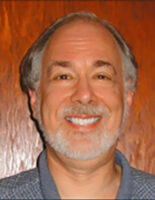
Sullivan also pointed out that this architectural firm has "come under budget on projects before; he has demonstrated a history of being efficient." Maulk noted that his work in "harmoniously" joining new construction with the older work attracted the committee to this architect. Peter A. Gisolfi, AIA, ASLA is also a published author and is currently a professor of architecture and landscape architecture at City College. He has also taught at Columbia University and was the director of the thesis program for CUNY and the director of the urban landscape program at CUNY. He founded the firm in 1975 and has compiled a team from his staff of registered architects, a production architect, a project manager, a director of interior architecture, and landscape architects to work on the Garden City project.
Gisolfi will prepare a detailed scope of work revision as well as a complete analysis of SED application requirements, SEQR issues, program and space requirements, alternative approaches, and will develop an overall plan of action. His graphic presentations were also complemented by Sullivan and Maulk and both view these as assets in the bond issue support phase as presentations are made to the public. Post construction services, should the bond pass, include guarantees from contractors and manufacturers as well as providing maintenance manuals for various elements and systems and budget.
The work on the middle school roof has already begun. The roof had been leaking over time until the floor of the school's gymnasium was damaged. Before the floor work could begin, the leak which caused the problem had to be corrected. While the contract is still under review with the district's legal counsel, the board has ratified the employ of the architect for the purpose of repairing the roof, and upon approval from counsel will be asked to ratify the contract officially to formally begin the bond preparation process. The architect is currently reviewing the documents related to the capital improvements of the schools prepared by the Ad Hoc Committee.
Construction management firms are now being interviewed by the Ad Hoc Committee, who have stated do not need this party on board for the planning stage to begin. The Ad Hoc Committee will be making a presentation of their progress to the EPOA on June 16 in Stewart School and all residents are invited to attend.