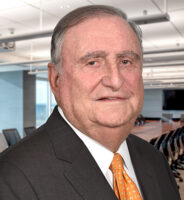
Senator Charles J. Fuschillo, Jr. announced this week that the Senate will act later this month on his legislation to reduce the state's legal limit for blood alcohol content (BAC) to be charged with DWI to .08, and separate measures that would put in place stronger criminal penalties against repeat drunk drivers and drivers with very high blood alcohol levels.
"New York State has made significant strides in combating DWI," Fuschillo said. "The legislation I am sponsoring takes another giant leap forward by enacting a .08 BAC limit. I wish to applaud Mothers Against Drunk Driving who have taken the lead in the fight for .08 as an effort to continue the trend of reducing the number of alcohol-related deaths and injuries in our state and to make our roads and highways safer from those who drink and drive.
"The best way to save lives on our roads is a comprehensive approach that not only reduces the BAC level to be charged with DWI to .08, but to put in place stronger penalties that get repeat drunk drivers off the roads," Fuschillo said. "In fact, because the Assembly has yet to pass the plan to increase the minimum penalties for repeat drunk drivers it has caused the state to lose $22.6 million in federal highway construction funds over the past two years that we cannot get back and we will lose $20 million in 2003-04 if the assembly does not act on these measures."
"The legislation that we will act on during our special session will bring New York State in compliance with the federal government and ensure that we do not lose any federal aid as a result of not having the .08 BAC level in place," Fuschillo said.
Fuschillo emphasized the need for strong penalties on repeat offenders by pointing out a recent news stories about a Bay Shore resident with 12 previous DWI arrests and 105 suspensions on his license who was again arrested on a DWI charge last week. A man from Saratoga County whose license has been revoked or suspended 15 times since 1989, 14 times on alcohol-related charges, was also arrested again for felony DWI after crashing into two cars.
"The .08 issue has been the subject on a great deal of media attention including a string of news conferences by US Senator Charles Schumer," Fuschillo added. "If Senator Schumer really wants to be helpful he should go to Washington and get back the $36 million in federal incentive aid that New York lost out on as a result of the delay in enacting .08."
"We just had Thanksgiving and there was one less person at our table," Dee Cornella of Floral Park, president of MADD on Long Island, said. "Eleven years ago our 17-year-old daughter Amy was killed by a repeat drunk driver in Nassau County, and the driver was later arrested for drunk driving again. We must do everything possible to get repeat drunk drivers off the road so more families do not have to suffer."
"I wanted to come to Senator Fuschillo's announcement, but I had to be in court because the drunk driver who killed my daughter was arrested for DWI for a fifth time," said Barbara Consalvo of Mount Sinai (Suffolk County), whose 19-year-old daughter Danielle was killed by a serial drunk driver in 1996. "The horrific crash that caused the death of my daughter, and the fact that the person who caused it is still drinking and driving, illustrates the need to make New York's laws much stronger to ensure that drunk drivers are severely punished and kept off the roads."
The Senate plans on acting on the following legislation during its special session on Dec. 17:
This legislation sponsored by Senator Fuschillo (S.7868) would reduce the minimum blood alcohol level (BAC) to be charged with DWI from .10 to .08 to help deter people from drinking and driving. In addition, the Senate will act on a Chapter Amendment to this bill that addresses concerns raised by the State Police regarding more accurate and efficient methods to determine whether a person is intoxicated and impaired.
* MADD estimates that 40 lives would be saved if NYS enacts a .08 BAC limit;
* According to the National Highway Transportation Administration, lowering the BAC limit can reduce fatal crashes by up to 18 percent;
* 31 states have adopted .08;
* An average size man would reach .08 BAC after drinking four beers in one hour.
* With Senate passage of this bill, it can now go to the governor for his consideration.
According to the National Highway Transportation Administration, one in every three drivers charged with driving while intoxicated has a previous DWI within the prior 10 years. This bill would establish tougher penalties against repeat drunk drivers, as well as creating new crimes to update state laws to crack down on people who drink, drive and kill.
The bill includes several provisions that would increase criminal penalties, including mandatory jail terms or community service for DWI repeat offenders. New York State has already lost more than $22 million in federal highway construction funds because of the Assembly's failure to act on these measures and stands to lose $20 million for highway construction if the Assembly does not act by Sept. 30, 2002 on these provisions:
* 5 days jail or 30 hours community service for a DWI conviction with one prior DWI conviction within five years;
* 10 days jail or 60 hours community service for a DWI conviction with two or more prior DWI convictions within five years.
The bill would more than double the minimum fines for repeat DWI offenders from $1,000 to $2,500 for two DWIs within five years, and from $2,000 to $5,000 for three DWIs within ten years.
As part of sentencing, DWI repeat offenders must undergo an alcohol or drug dependency assessment. In addition, they will either have their automobile registration revoked or an ignition interlock device installed on their automobile. This choice would be at the discretion of the sentencing judge.
"Under our current laws, it's possible for a drunk driver to be convicted of numerous DWIs in a 10-year-period and still receive only a minimum fine and no jail time," Senator Fuschillo said. "That is wrong and it must be changed. I look forward to the Assembly to pass this bill so we can get repeat drunk drivers off the road and ensure that we do not lose any more federal aid for highway capital construction."
As a result of not having the stronger minimum penalties in place for repeat DWI offenders, the state lost $9 million in federal aid for highway construction in SFY 2001-02 and $13.6 million in 2002-03.
This bill would create the new crime of Aggravated Driving While Intoxicated, a Class E Felony, when a person is convicted of DWI with a BAC of .20 or more. The average BAC of a driver charged with DWI is .17. The mandatory license revocation period would be increased from six months to one year for the first offense and fines range from $500-$5,000.
The Senate will act on legislation that would:
* Strengthen Vehicular Assault 2nd and Vehicular Manslaughter 2nd by eliminating the need to prove criminal negligence by the defendant when their ability is impaired by alcohol or drugs (includes autos, snowmobiles, vessels and all-terrain vehicles)
* Strengthen and broaden Vehicular Assault in the 1st degree and Vehicular Manslaughter in the 1st degree by: adding these additional elements - considering when a person has recklessly caused serious physical injury or death; considering similar convictions of a substantial nature that occurred in other states and considering if a person has been convicted multiple times within the prior 10 years of any combination of any alcohol and drug driving offenses.
* Create the crime of Aggravated Vehicular Assault, a Class C Felony, whereby a person recklessly causes the serious physical injury of another while driving while intoxicated or under the influence of drugs.
* Create the crime of Driving While Impaired by the Combined Effects of Alcohol and Drugs, which recognizes that a combination of these two substances can result in a substantial impairment to a person's ability to drive.
* Raise the crime of Unlawfully Dealing with a Child 1st from a Class A Misdemeanor to a Class E felony when a person purchases or causes alcohol to be given or sold to a person under the age of 21 three times or more within a five-year period.
* Evasion of a Police Officer by a Motor Vehicle Operator, a Class A Misdemeanor, becomes a Class E Felony if a police officer or bystander(s) are injured. The police officer must however, be operating an authorized emergency vehicle marked with police decals and have activated the vehicle's emergency lights and siren.
* Create the crime of Vehicular Murder, a Class B Felony, whereby a person recklessly causes the death of another while driving while intoxicated by alcohol or under the influence of drugs.
* Ensure that all motor vehicle operators who refuse to take a chemical test are treated the same concerning the mandatory requirement that their license be suspended and then revoked.
* Permit prosecutors to more easily obtain the medical records of drivers involved in accidents where the use of drugs or alcohol are suspected.