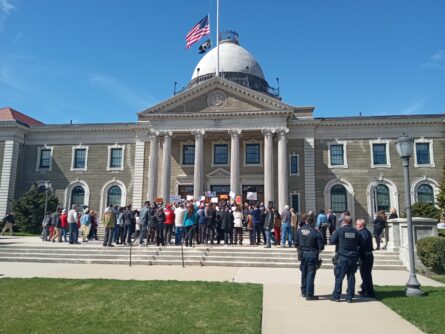
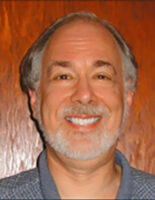
Oyster Bay Town Supervisor John Venditto, together with members of the town board, announced earlier this week that the town is moving to condemn an approximate 15 acres of the Liberty Site in Farmingdale, to be used as parkland, in an effort to increase the EPA's (Environmental Protection Agency) proposed cleanup plan from their current preferred SL-2 plan to the SL-3 plan, which is preferred by residents and local elected officials alike. The board has scheduled a special public hearing for next month.
"The EPA's decision selecting their recommended level of cleanup of the Liberty Site is imminent, making my call for a special town board meeting absolutely necessary," Venditto said. "I am convinced that taking these actions now will make it crystal clear to the EPA that the only level of cleanup consistent with the future use of this property, and consistent with the desires of the residents of Farmingdale, is the SL-3."
Under the SL-2 plan, the EPAs current preferred remedy, the contaminated portions of the site would be cleaned up to commercial/industrial standards, involving capping of much of the site and the removal of approximately one third (25,500 cubic yards) of contaminated soils. The SL-3 cleanup would warrant full removal of all contaminated soil, resulting in no capping being necessary.
Venditto, who has long been fighting with the EPA, together with local elected officials and residents of the communities surrounding and affected by the Liberty Site, has called a special public hearing of the town board to be held on Tuesday, April 2, in the hearing room of Town Hall East, located at 54 Audrey Avenue in Oyster Bay. The meeting is scheduled to begin at 7 p.m.
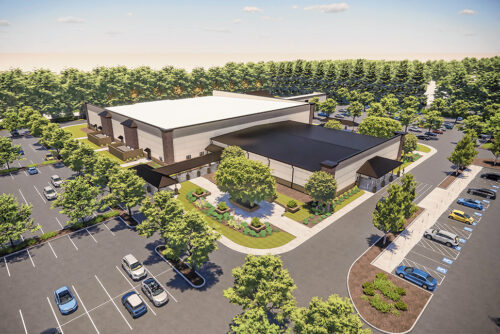
"I have long been determined to take every step necessary to move forward toward acquiring the western portion of the 31-acre Liberty Site to expand Ellsworth W. Allen Town Park," Venditto said. "In addition, I have publicly stated that the Liberty Site must be cleaned to the highest of the proposed cleanup levels (SL-3). It is my strong belief that the use the town will propose for this property will require the SL-3 cleanup."
Venditto, together with members of the town board, local officials (or their representatives), and residents of Farmingdale and neighboring communities, have been present at recent meetings the EPA has held regarding the cleanup of the site. For years, residents have been pushing for the best level of cleanup possible, and the town feels that this measure, acquiring approximately half of the site, will warrant such action, as the 15 acres the town is looking to acquire encompass the most contaminated portion of the site.
"A public hearing is an important step in the condemnation procedure," Town Councilman Joe Muscarella said. "Under the law, the condemnor ... in this case, the town ... must hold a hearing to inform the public of the proposed condemnation, the proposed use of the site, and the effect of the acquisition on the environment and residents of the community. Within 90 days of the hearing, the town must make and publish its findings and make a written offer to the landowner. The owner can accept or reject the offer in full or accept it as partial payment."
The councilman added that if the owner does not respond in writing within the allotted time, the offer will be deemed as accepted.
Venditto noted that the town has contacted the landowner and notified him of their intentions.
The supervisor noted that he, and members of the town board, have communicated, both in writing and via telephone, with Farmingdale elected representatives in Washington and with EPA Administrator Christine Todd Whitman, urging the EPA to adopt the SL-3 cleanup plan.
"It is the only solution acceptable to the community," Venditto emphasized. "Anything less would require perpetual monitoring and maintenance to ensure that contaminants are not released into the environment in the future."
At the most recent EPA meeting, held in January, residents said that they didn't feel comfortable leaving the site in a condition that would make monitoring necessary, and urged EPA representatives to simply remove all contaminants so no future actions at the site would have to be taken. At that time, Venditto also told EPA representatives and residents in attendance that if necessary, the town would rezone the property if that would make the EPA have to move to the higher level of cleanup. With this measure, acquiring 15 acres of the property, rezoning would not be necessary.
"My call for this special meeting is the town's first step in providing the proper solutions for the future recreational needs of our residents, as well as ensuring that the public health, safety and welfare are protected," Venditto said.
The town has contacted the EPA regarding their intentions and will soon be providing them with a more specific idea as to what the exact usage of the land will be once it is acquired by the town. Town officials explained that if for some reason this measure does not cause the EPA to move to a greater level of cleanup, there will still be no restrictions as to the land use once it is acquired by the town. They are currently working on more concise plans with their engineers.
"The EPA is currently overseeing a hazardous waste removal action at the Liberty Site under the federal Superfund program," Councilman Anthony Macagnone explained. "The EPA's preference for the SL-2 cleanup is based upon findings of a risk analysis for potential human exposure to site contamination predicated on the future use of the property being for commercial/industrial development. If the site were intended for a more sensitive use, such as a park, a more rigorous cleanup would be required."
Venditto noted that this measure will hopefully force the EPA to fulfill the request he made of them back at the January meeting, to "do the right thing" and give the residents the cleanup they deserve.
"My town board colleagues and I believe the community has suffered long enough and that the proper cleanup of Liberty requires the removal of contaminated soils under alternative SL-3," Venditto said.