Kosovo has been torn apart for the past 10 years, but ethnic Albanians have been conquered, purged and been outcasts for centuries. Many ethnic Albanians, long without a country to call their own, live in sections of Turkey, Greece, Macedonia, and, of course, Kosovo. Kosovo declared its independence on July 2, 1990 but when the Serbs retook the country only a week later Albanians were methodically banned from employment. Yet it wasn't until this spring that the ethnic cleansing by the Serbs began in earnest. Then came the NATO bombings.
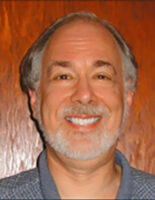
Adnan Gashi remembers it well because the unrest between the KLA and the Serbs has been taking place for at least the latter half of his life. Adnan, who is 22, was among the first three families to come to Long Island on June 2 under the government's "I -94 Special Refugee" status. He and his family are now living in South Farmingdale with Don and Mary Weiss, residents of 40 years who volunteered their home through Catholic Charities for an indefinite period of time. Two other families, the Goxhufis and Xhemas, who are all relatives, are staying in Hicksville.
While others who had also come to this country or gone to other countries such as Norway and Switzerland are returning to Kosovo this week, and the Gashi family is also contemplating that, Adnan is not so sure.
He, an only child, and his mother and father Zekia and Enver, both in their 40s, fled March 26 to Macedonia from their home in Pristina, the capital of the province. Under the former Serb-led government, Zekia lost the bridal dress shop she had owned for 13 years. Enver, a medical lab technician, despite outlasting drastic cuts over the past decade of some 90 percent of his ethnic Albanian co-workers, was ousted from his job of 29 years when Serbs took over the hospital. Under the former regime, ethnic Albanians were routinely banned from education and many professions, such as medicine, and from employment in general. The children could not attend public schools, and even the official language was changed to Serbian, which unlike that of Latin-based Albanian has a Cyrillic-based alphabet like that of Russian.
"It was a very undesirable situation," says Adnan, who is intelligent and has a deft command of the English language. Conditions were oppressive, yet he explains how heart-wrenching it was to leave everything behind - especially close friends, cousins, relatives; and how fragile life is: a cousin who was evacuated to Norway as a refugee was killed in a bus accident just a few weeks ago.
But in Pristina, a city of 300,000, it was unbearable. "Police had a bad reputation," he recounts, "they took money, there were beatings and killings." For Albanians there was no police. "Serbs could kill Albanians and no one would be arrested." The current beatings and killings have gone on for the past 10 years. Just last March Adnan took part in a demonstration, the KLA against the Serbs, and he witnessed beatings; he himself got struck with a water cannon. But he's been taking part in demonstrations since 1989, when he was 12, and is philosophical about it: "When you're raised that way you don't consider it a big deal."
By the time the Serbs came to their house the Gashis did not have much left because they were forced to barter nearly everything they had. Word was out that the Serbs were coming door to door. Still it was a shock when they came. The police, disguised in masks, broke down their door shouting, "Get out. Take only the clothes on your back." Zekia took her pocketbook, and they left. Enver escaped, hid in the woods, and then went back to stay in the house to see if he could salvage whatever was left of value. Adnan explains his reasoning: "You feel as long as you're in your house, nothing will happen." One week later he decided to flee and caught up with them on the road. They stayed in a refugee camp in Macedonia, and say the worst part of their ordeal was being stranded five days at the border with no food to eat.
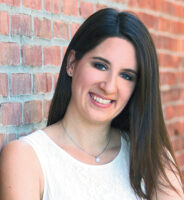
Meanwhile, Adnan's girlfriend's family tried to remain in their village; twice the Serbs came to steal and torch their house, and twice they put out the fires and survived. Finally they were driven from their home. His girlfriend Zana Imeri, 17, her mother, and a 3-year-old sibling, left in a car with other family members.
Their car, with seven people inside, was delayed at the border on the Serbian side for six days. They took shifts outside the car to allow the others inside to get some rest. Zana spotted a distant cousin a few cars in front of theirs. She crossed the border into Macedonia and, because of a technicality, the Serbs would not let her back in. She was in freedom - but the others couldn't leave. She was separated from her family. Fortunately she was able to link up with her maternal grandparents who live in Macedonia, and contacted Adnan by phone. From that point on she was totally cut off from communication with her parents.
The bombing continued. In late May the U.S. government began picking up people at refugee camps. It was then Zana and Adnan, Muslims who have very traditional beliefs, decided if Zana, who was underage and would need parental permission to leave the country, was to stay with her boyfriend and the Gashis, they would have to marry, a few years ahead of plan. They hastily gathered a few family members together, void of the bride's family, and had a simple wedding. "I didn't think it was right to have music or a big party when my countrymen were being killed," says Adnan.
A 22,000 immigration allotment was set for the U.S.; however only some 9,000 refugees actually came to this country. Approximately 6,000 went to Fort Dix, New Jersey, and from there people were scattered throughout the country. About 30 Kosovar refugees came to Long Island. Of those, the Gashi, Goxhufi and Xhema families were sponsored by a 31-year-old Hicksville man, who is either first or second cousin to each. An ethnic Albanian from Turkey, he has lived in the U.S. 10 years. They had previously never met until they arrived that June morning at JFK Airport.
While the government granted them "I-94" political asylum, Catholic Charities did most of the legwork. The Department of Social Services provided food stamps and Catholic Charities furnished a one-time allotment of $250 each. Because they can live at the Weiss' and don't have to pay for housing, the family of four was able to pool their money and scrape up enough for a $1,000 used car with auto insurance. Adnan passed his road test and is anxious to begin working.
The car is transportation to get father and son to a recently attained job in Garden City packing pharmaceuticals. Miserably, when the new car was checked by a mechanic it was determined that it needed $450 in repairs - an overwhelming amount to people who are down to their last cent.
Adnan says grimly, "It feels good to be here and to have the job. But the mechanical problem spoils the job. How will we get to Garden City without transportation? It doesn't feel good to have to depend on others to drive you."
However, Adnan is a very determined person which you can see in the intensity in his carved face. He says the important thing is not to blow a problem out of proportion. "I'm going to find a way," he says. "If I don't make my problem too big I will work through it like I have with any other problem I dealt with in the past, and it's that much easier to go through. Money is important," he adds, "but your morals and if you're decent is much more important."
What is happening with the situation in Kosovo now? Hundreds of thousands of refugees from host countries are returning home, mostly to war-torn, looted and/or torched homes, destroyed power and phone lines, and little or no plumbing. The Goxhufi and Xhema families have pretty much decided to go back home. Many still have yet to discover what's happened to all their family and friends. Just last week the Weiss residence received a phone call at 6 a.m. It was a man's voice asking with a heavy accent, "Is ... Zana ... there ... please?" When the newlywed was awakened she was greeted with good news: her father had called to say her family was safe and had returned home.
Will the Gashis return to Kosovo? Zana is feeling nostalgic and homesick for her family, mother, brother and two sisters. Adnan's uncle has been offered to be reinstated as a doctor if he returns. And his parents wonder if they should go back; going back may not be easy, but staying may be even more difficult. They struggle daily to make a living, to learn English by taking classes given by a local teacher, to find a place to live - it's so hard to build from the ground up at this stage of their lives. Adnan notes that his mother is working as a seamstress, which is very different from being in business for herself. As for Adnan, he is exuberant about being here. "I always wanted to come here," he admits. "It is much better than I expected. From watching all the movies I thought it would be much more violent."
For now as a guest on his sponsor's email account, he contacts Kosovo nightly to find out about relatives and friends. It's still a waiting game to find out if everyone is okay. "It will be a big comfort if people aren't missing," he ruminates.
"Nothing is definite," he comments about his parents returning home - with or without him. But in the back of his mind he knows they need to depend on him in the future. "To separate from my parents - I don't know if I can make such a decision now." Yet the star English pupil who always honed his language skills by writing to pen pals abroad is not going to give up his dream easily.
Editor's Note: Those who would like to provide assistance to the Kosovar refugees are asked to call the St. Kilian Outreach office at 756-9656.